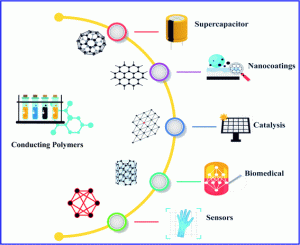
Conductive polymers such as FEP and PFA are a class of materials that exhibit electrical conductivity while maintaining the mechanical properties and processability of traditional polymers. These materials have garnered significant attention and research interest due to their unique combination of properties, which offer a wide range of potential applications. Here are some of the benefits of conductive polymers:

  1. Electrical Conductivity: Conductive polymers can conduct electricity, making them suitable for various electronic and electrical applications. Unlike traditional insulating polymers, which do not conduct electricity, conductive polymers can carry electrical currents.
  2. Lightweight and Flexible: Conductive polymers are lightweight and flexible, which makes them ideal for applications where traditional conductive materials like metals would be impractical due to their weight or lack of flexibility. This property is particularly advantageous in wearable electronics, flexible displays, and flexible sensors.
  3. Processability: Conductive polymers can be processed using conventional polymer processing techniques, such as injection molding. This ease of processing allows for the production of complex shapes and making them versatile materials for various applications.
  4. Corrosion Resistance: Unlike metals, conductive polymers are generally corrosion-resistant, making them suitable for use in harsh environments, such as marine or chemical processing applications.
  5. Biocompatibility: Some conductive polymers are biocompatible, which means they can be used in medical devices, implantable electronics, and tissue engineering applications without causing harm to living tissues.
  6. Low Cost: Conductive polymers are often more cost-effective than traditional conductive materials like metals or semiconductors. This cost advantage can make them attractive for large-scale applications.
  7. Energy Storage: Conductive polymers are used in energy storage devices, such as supercapacitors and batteries, due to their ability to store and release electrical energy efficiently.
  8. Sensors and Actuators: They are used in various sensor and actuator applications, including chemical sensors, gas sensors, strain sensors, and smart materials that can change shape or properties in response to electrical stimuli.

While conductive polymers offer many advantages, they also have some limitations, such as lower electrical conductivity compared to metals and sensitivity to environmental factors like moisture and oxygen.

For more information on electrically conductive materials and how Performance Plastics leverages their use, please contact Rich Reed, Vice President of Sales & Marketing at 440-785-7122 or [email protected]


Maintenance of injection molds is crucial in manufacturing plastic and metal parts. It plays a significant role in ensuring product quality, minimizing downtime, and extending the lifespan of the molds. Here are some key reasons highlighting the importance of maintenance of injection molds:

  1. Quality Assurance: Regular maintenance helps uphold the quality and consistency of the manufactured products. Any wear and tear on the mold can lead to defects in the final products, such as surface imperfections, warping, or dimensional inaccuracies.
  2. Cost Efficiency: Preventive maintenance is more cost-effective than corrective measures. Properly maintained molds are less likely to break down, reducing the need for costly repairs or replacements. This can lead to significant cost savings over time.
  3. Downtime Reduction: Mold breakdowns or failures can result in production downtime, which can be extremely costly for manufacturing facilities. Routine maintenance can help identify and address potential issues before they cause major disruptions in production.
  4. Longevity of Molds: Injection molds can be expensive to produce, so maximizing their lifespan is essential to get a return on investment. Regular maintenance can extend the life of molds, allowing them to be used for a more extended period.
  5. Consistent Cycle Times: Well-maintained molds operate more efficiently, leading to consistent cycle times. This ensures that production targets can be met without unexpected delays or variations in output.
  6. Productivity Improvement: Maintaining molds at optimal conditions can enhance productivity by reducing the likelihood of production defects, mold-related issues, and unplanned downtime. This, in turn, boosts overall efficiency.
  7. Safety Considerations: Molds that are in poor condition can pose safety risks to workers. Sharp edges, loose components, or damaged parts can lead to accidents. Regular maintenance helps identify and rectify potential safety hazards.
  8. Waste Reduction: When molds are not properly maintained, defective parts are likely to be produced. This can result in increased material waste, which is both environmentally and economically unfavorable.
  9. Customer Satisfaction: Consistency in product quality, thanks to well-maintained molds, leads to higher customer satisfaction. Satisfied customers are more likely to return and recommend your products to others.
  10. Compliance with Standards: In some industries, there are strict quality and safety standards that must be adhered to. Regular mold maintenance can help ensure compliance with these standards and prevent costly fines or legal issues.

In summary, maintenance of injection molds is critical for maintaining product quality, reducing costs, minimizing downtime, ensuring safety, and prolonging the life of molds. Investing in a proactive maintenance program is a smart strategy for any manufacturing operation that relies on injection molding processes.

For more information on how Performance Plastics maintains our molds and our manages our best practices, please contact Rich Reed, Vice President of Sales and Marketing at [email protected], or visit our website and www.performanceplastics.com.


Plastic Injection Molding HPM (high-performance material) parts with tight tolerances demand that processes are repeatable within established limits.  Performance Plastics utilizes best practices to eliminate process inefficiencies and unplanned maintenance, when working with materials such as Torlon (PAI), PEEK, Ultem (PEI) and FEP/PFA.  Simple processes must take place every shift to ensure that process and production are on target.

  • Process Validation

Process validation procedures must be completed prior to establishing process monitoring.  A validated process must run at complete cycle efficiency, producing little to no scrap for no less than 8 hours.  Evaluations and considerations must be analyzed whether a process can be repeated from one run to the next.

  • Process Installation Qualification – Making Sure Everything Works
  • Operational Qualification – Test, Test, and Test Again
  • Performance Qualification – Testing the actual Part.
  • Process Monitoring

Many companies fail to understand that a similar press or mold does not guarantee the tight tolerance processes will be repeated, especially when working with HPMs.  Each press must have its own process monitoring record, and sister molds need to be approached as completely different molds.

Areas that must be constantly monitored:

  • Fill Time
  • Peak Pressure
  • Part Weight
  • Cycle

Each value must have control limits and must be within the window established for these limits to control.

  • Basic Molding Fundamentals

The key to the HPM process consistency is the care and inspection of molds before each job.

  • Molds are cleaned and inspected.
  • Nozzles are inspected for blowback.
  • Hot runner point temperatures are verified.
  • Water is verified at the beginning of each run.

Performance Plastics embraces best practices in order to provide our customers with the quality and repeatability required for HPM tight tolerance medical, aerospace, and industrial parts.

For more information on how Performance Plastics manages our best practices, please contact Rich Reed, Vice President of Sales and Marketing at [email protected], or visit our website and www.performanceplastics.com


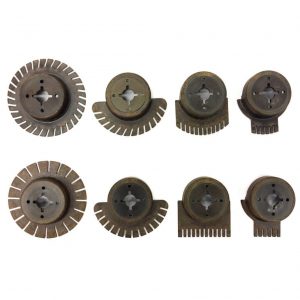
EnduroSharp® Torlon® Gap Filler Removal (GFR) Discs are designed for use with a pneumatic tool. The tools provide aerospace maintenance professionals with an effective method of safely removing flexibilized epoxy gap materials as well as cutting or scoring thick elastomeric coatings without damaging composite substructures.

Usually sold in boxes of 4 we are offering, for a limited time, the opportunity to purchase a variety of 4 different style discs in one box.  Priced at $180 per box,, the EnduroSharp®  Gap Filler Removal (GFR) Discs are crafted from resharpenable Torlon® PAI, allowing for multiple uses and extended durability.

The EnduroSharp® Gap Filler Removal Disc Combo Pack are Torlon® rotary cutting tools that effectively eliminate sealants, adhesives, and coatings without causing abrasion to underlying substrates, paints, primers, or metal surfaces. It achieves a thorough cleaning without the need for chemical solvents, thereby reducing chemical waste and minimizing exposure risks.

For more detailed information about the EnduroSharp® Torlon® Gap Filler Removal Disc Combo Pack and how EnduroSharp® tools can save you time and money in aircraft maintenance, please reach out to Aileen Crass,  Marketing Manager at [email protected] or visit our website at www.performanceplastics.com/endurosharp.

Equip yourself with the EnduroSharp® Gap Filler Removal Discs and experience a cutting-edge solution for efficient and effective aircraft maintenance.