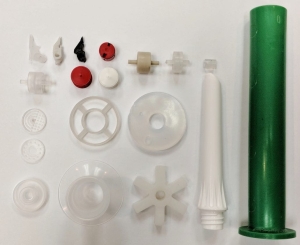

Fluoropolymers are indeed an excellent choice for parts that must perform in challenging environments. These polymers, which include materials like PTFE (polytetrafluoroethylene), FEP (fluorinated ethylene propylene), and PFA (perfluoroalkoxy), offer a range of unique properties that make them ideal for such applications:

  1. Chemical Resistance: Fluoropolymers are highly resistant to a wide range of corrosive chemicals, acids, and bases. This makes them suitable for use in environments where other materials would quickly deteriorate or corrode.
  2. Temperature Resistance: These polymers can withstand extreme temperatures, both high and low. PTFE, for example, can handle temperatures as low as -200°C and as high as 260°C, making it ideal for applications in harsh temperature conditions.
  3. Non-Stick Properties: Fluoropolymers have excellent non-stick properties, which means they do not easily adhere to other materials. This is why they are often used in cookware coatings, but it’s also valuable in industrial applications where materials need to slide or not adhere to surfaces.
  4. Electrical Insulation: They have good electrical insulation properties, which is important in applications where electrical conductivity could cause problems.
  5. UV Resistance: Many fluoropolymers are highly resistant to ultraviolet (UV) radiation, making them suitable for outdoor applications.
  6. Low Friction Coefficient: These materials have a low coefficient of friction, which means they can reduce wear and tear in moving parts and machinery.
  7. Biocompatibility: Some fluoropolymers are biocompatible, making them suitable for use in medical and pharmaceutical applications.

Fluoropolymers find applications in various industries, including chemical processing, electronics, aerospace, and automotive, where they are exposed to aggressive chemicals, extreme temperatures, and other challenging conditions. Their durability, resistance, and performance characteristics make them an excellent choice for parts and components in these demanding environments.

For more information on how Performance Plastics can help you with your material choice in challenging environments, please contact Rich Reed, Vice President of Sales and Marketing at [email protected]


Thermoplastic injection molded PEEK Medical Tool

Thermoplastic Injection Molded PEEK Medical Device

High-performance polymers have gained significant attention in the field of medical devices due to their unique properties and advantages. These materials offer a compelling alternative to traditional materials like metals and ceramics in various medical applications. Here are some reasons why high-performance polymers are a great alternative for medical devices:

  1. Biocompatibility: High-performance polymers, such as PEEK, FEP, PFA, and PPSU, are inherently biocompatible. They do not trigger adverse immune responses or toxicity when in contact with biological tissues, making them suitable for implants and other medical devices that interact with the human body.
  2. Lightweight: Polymers are generally lighter than metals, making them ideal for applications where weight reduction is critical, such as orthopedic implants and prosthetics. Lighter devices can improve patient comfort and reduce the risk of complications.
  3. Corrosion Resistance: High-performance polymers are highly resistant to corrosion and chemical degradation. This property is advantageous in medical devices that come into contact with bodily fluids and other aggressive environments. Unlike metals, they do not rust or corrode.
  4. Radiolucency: Some polymers, like PEEK, are radiolucent, meaning they do not block X-rays or other imaging techniques. This feature allows for clear and accurate imaging of the surrounding tissue and device placement without interference.
  5. Customizability: Polymers can be easily molded and machined into complex shapes, which is crucial for designing patient-specific implants and devices. This customizability can improve the fit and function of medical devices.
  6. Low Friction and Wear Resistance: Polymers can offer low friction and wear characteristics, making them suitable for articulating joints and moving parts in medical devices. This reduces the risk of device failure and the need for frequent replacements.
  7. Electrical Insulation: High-performance polymers are electrical insulators, which is essential in devices like pacemakers and neurostimulators to prevent unwanted electrical interference with surrounding tissues.
  8. Thermal Stability: Many high-performance polymers exhibit excellent thermal stability, allowing them to withstand sterilization processes such as autoclaving without degradation.
  9. Cost-Effective: Compared to some specialty metals and ceramics, high-performance polymers can be more cost-effective, making medical devices more affordable for healthcare providers and patients.
  10. Regulatory Approval: Several high-performance polymers have received regulatory approval for use in medical devices, indicating their safety and suitability for these applications.

Despite their numerous advantages, high-performance polymers also have limitations, including lower strength and stiffness compared to some metals and ceramics. Therefore, their selection for specific medical device applications should consider the specific requirements and constraints of the device.

In conclusion, high-performance polymers offer a compelling alternative for medical devices due to their biocompatibility, lightweight nature, corrosion resistance, customizability, and other favorable properties. As materials science continues to advance, it is likely that high-performance polymers will play an increasingly significant role in the development of innovative medical devices.

For more information on polymers for medical devices and how Performance Plastics leverages their use, please contact Rich Reed, Vice President of Sales and Marketing at [email protected].

PFA or high-purity perfluoroalkoxy is a high-performance material ideal for the semiconductor industry due to its excellent chemical resistance, high-temperature stability, and electrical insulating properties. These characteristics make it suitable for use in extreme conditions. However, it’s important to ensure that the PFA material meets specific semiconductor requirements.

Here are some factors to consider when using injection-molded PFA in semiconductor applications:

  1. Purity: Semiconductor manufacturing requires extremely high levels of material purity to prevent contamination. Ensure that the PFA material used in injection molding meets the purity standards required for semiconductor processes.
  2. Temperature Resistance: Semiconductor processes often involve high temperatures. PFA has a high melting point and can withstand elevated temperatures, making it suitable for many semiconductor applications.
  3. Chemical Compatibility: PFA is highly resistant to a wide range of chemicals, which is advantageous in semiconductor processing where various chemicals are used. Ensure that the PFA material is compatible with the specific chemicals and processes in your semiconductor application.
  4. Electrical Insulation: PFA is an excellent electrical insulator, which is important in semiconductor equipment and components where electrical isolation is required.
  5. Surface Finish: The surface finish of injection molded PFA components should meet the cleanliness and smoothness requirements of the semiconductor industry to minimize the risk of particle contamination.
  6. Dimensional Accuracy: Precision and tight tolerances are often required in semiconductor equipment. Injection molding can achieve high levels of dimensional accuracy, but it’s crucial to ensure that the molded parts meet the required specifications.
  7. Compliance with Standards: Ensure that the PFA material and injection molding processes used comply with relevant industry standards and regulations in the semiconductor sector.
  8. Testing and Validation: Conduct rigorous testing and validation of PFA components in your semiconductor application to ensure their performance under actual operating conditions.

It’s important to work with an experienced manufacturer, such as Performance Plastics, who understands the specific requirements of the semiconductor industry. Our engineers can help you choose the right PFA material, design components to meet your needs and ensure that the injection molding process meets the strict semiconductor industry standards.

For more information on how Performance Plastics can help with your semi-conductor project, please contact Rich Reed, Vice President of Sales and Marketing at 440-785-7122 or email at [email protected]