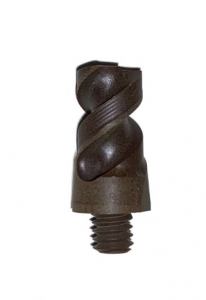
Performance Plastics is pleased to announce two additions to its EnduroSharp® line of aircraft maintenance tools: the EnduroSharp® Torlon® Sealant Remover (TSR) and three new EnduroSharp® Adhesive Reamers (TAR).

The EnduroSharp® Torlon Sealant Removers (TSR) are non-metallic, spiral single-fluted cutters designed to remove non-metallic debris such as cured sealants and adhesives from larger surface areas such as fuel tanks.

Designed for use with a power drill, the cutters have a hex drive mounting feature and are reusable because they are made of a re-sharpenable material called Torlon®. The cutters were designed to remove sealants, filers, and coatings cleanly with no abrasion to the underlying paints, primers, or metal substrates.

The EnduroSharp® Torlon® Adhesive Reamers (TAR) are non-metallic, multi-fluted, straight-walled reamers. They can be used to remove debris such as cured sealants and adhesives from fastening and bushing holes in metallic or composite structures without damaging the structures. Originally offered in nine sizes, we have added three new sizes to the lineup: the TAR 171 (0.171” Diameter, Straight Fluted, ¼ Inch Hex Drive), TAR 234 (0.234” Diameter, Straight Fluted, ¼ inch Hex Drive), and TAR 296 (0.296” Diameter, Straight Fluted, ¼ inch Hex Drive).

Performance Plastics developed all EnduroSharp® Aircraft Maintenance Tools in conjunction with the University of Dayton Research Institute (UDRI), and the Air Force Research Laboratory (AFRL) to provide reliable and dependable material removal tools for military and commercial aircraft maintainers.
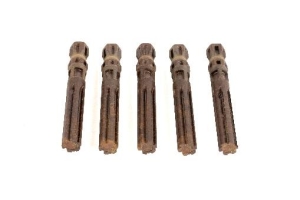
Approved for use by the USAF, USMC, USN, and many foreign military organizations, EnduroSharp® tools are designed to prevent damage to metallic and non-metallic components such as composites, metals, and fiberglass. The EnduroSharp® tools are stiffer and maintain a superior cutting edge compared to other alternative thermoplastics tools.

For more information on the new EnduroSharp® offerings, please contact Rich Reed, Vice President of Sales and Marketing at [email protected], or visit our website at www.performanceplastics.com/endurosharp.
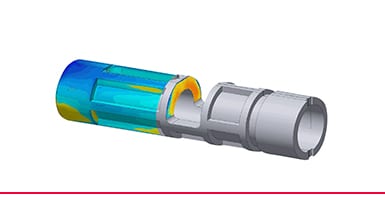
As you’re designing and manufacturing your next project, wouldn’t it be ideal if you could analyze all the existing parts, compare them to the original drawings, and get results quickly, without damage? At Performance Plastics, we have the ability to do this through industrial computed tomography (CT) scans. This gives us the ability to measure all aspects of your part, without having to damage it.


Performance Plastics specializes in tight tolerance, high-performance polymers such as Peek, Torlon, FEP & PFA, and Ultem.  We leverage CT Industrial scanning to replicate parts made of other materials and improve their performance.

Industrial computed tomography (CT) scanning is a non-destructive testing (NDT) method that uses X-ray technology to produce detailed 3D images of the internal structure of objects. This technology is widely used across various industries due to its numerous benefits. Here are some key advantages of industrial CT scanning:

  1. Non-Destructive Testing (NDT): One of the primary benefits of industrial CT scanning is that it allows for non-destructive testing of objects. This means that the internal structures of components or products can be examined without causing any damage to the tested item. This is particularly important in industries where preserving the integrity of the object is crucial.
  2. High Resolution and Accuracy: Industrial CT scanners can produce high-resolution images with fine details, allowing for precise analysis of internal structures. This level of accuracy is especially valuable in industries where the quality and precision of components are critical, such as aerospace and automotive.
  3. Visualization of Internal Structures: CT scanning provides a three-dimensional visualization of the internal features of an object. This is particularly useful for inspecting complex geometries, assemblies, and multi-material components, allowing engineers and researchers to examine the internal structures in a comprehensive manner.
  4. Identification of Defects and Anomalies: Industrial CT scanning is highly effective in identifying defects, voids, cracks, and other anomalies within an object. This can be crucial for quality control and ensuring that products meet industry standards and safety requirements.
  5. Reduced Inspection Time: Compared to traditional methods of inspection, industrial CT scanning can significantly reduce inspection time. This is especially beneficial for industries where efficiency and rapid inspection are essential.
  6. Versatility: Industrial CT scanning can be applied to a wide range of materials, including metals, plastics, composites, and more. This versatility makes it a valuable tool across various industries, from manufacturing to medical research.
  7. Reverse Engineering: CT scanning can be used for reverse engineering applications, where the internal and external geometries of a component are captured digitally. This is useful for replicating or modifying existing components.
  8. Regulatory Compliance: In industries where compliance with safety and quality standards is essential, industrial CT scanning can help meet regulatory requirements by providing thorough and accurate inspections. In summary, industrial CT scanning offers a non-destructive, highly accurate, and versatile method for inspecting internal structures of objects, making it a valuable tool in various industries for quality control, research, and product development.

At Performance Plastics, we are experts in injection molding, specializing in high-performance plastics such as PEEK, Torlon, FEP & PFA, and Torlon for medical, aerospace, and industrial applications. Our proprietary tool design software, processes, and equipment enable us to injection mold components having complex geometries made from challenging ultra, high-performance thermoplastic materials, and reinforced compounds.

For more information on Performance Plastic’s capabilities, please contact Rich Reed, Vice President of Sales, and Marketing at 513.321.8404 or email at [email protected].

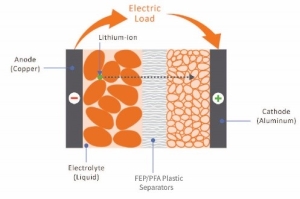
Fluorinated ethylene propylene (FEP) and perfluoroalkoxy (PFA) are fluoropolymer materials that are often used in the construction of certain components in batteries, particularly as insulating materials. While they may not directly store energy in batteries, they play a crucial role in enhancing the safety, efficiency, and performance of battery systems. Here’s why FEP/PFA plastics are important for the energy storage function of batteries:


  1. Chemical Resistance: FEP and PFA plastics are highly chemically resistant, which is crucial in battery applications. They can withstand exposure to various corrosive electrolytes and chemicals found within batteries without degrading or reacting. This resistance helps ensure the long-term stability and integrity of the battery components, leading to improved battery durability and lifespan.
  2. Thermal Stability: FEP and PFA materials have excellent thermal stability and can withstand a wide range of temperatures, from extremely cold to very hot conditions. This property is essential for batteries, as they can operate in environments with varying temperature conditions. Maintaining thermal stability helps to prevent short circuits, leakage, and overall performance issues.
  3. Dielectric Properties: Both FEP and PFA injection molded parts are excellent electrical insulators. They have a low dielectric constant and low dissipation factor, meaning they have the ability to insulate and isolate electrical components in batteries effectively. This is vital for preventing short circuits and ensuring the safe operation of the battery.
  4. Low Permeability: FEP and PFA plastics have low gas and liquid permeability, which is essential for battery separators. The separators in batteries are critical for preventing direct contact between the positive and negative electrodes, while still allowing the passage of ions. Low permeability materials help maintain this separation, preventing electrolyte leakage and maintaining the battery’s overall performance.
  5. Mechanical Strength: FEP and PFA injection molded materials are durable and mechanically robust. They can withstand mechanical stresses and pressure changes that batteries may experience during manufacturing, assembly, and use. This strength is particularly important for maintaining the integrity of battery components and preventing damage.
  6. Non-reactive Nature: FEP and PFA are non-reactive with most substances, which is essential for ensuring the purity of the battery components. They do not react with the electrolyte or other battery materials, helping to maintain the chemical stability of the battery system.

While injection molded FEP and PFA plastics do not store energy in batteries themselves, they are crucial components for ensuring the safe and efficient operation of battery systems. Their chemical resistance, thermal stability, dielectric properties, low permeability, mechanical strength, and non-reactive nature all contribute to the overall performance, safety, and longevity of energy storage systems, making them indispensable for the function of batteries in various applications. For more information on FEP and PFA plastics for batteries, please call Rich Reed, Vice President of Sales and Marketing at 440-785-7122.