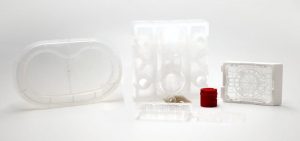

JOHNS CREEK, GA (June 5, 2024) – Pexco LLC, a leading North American specialty plastics processor, is pleased to announce the acquisition of the Wallingford, CT facility of Clayens. The Wallingford site, known for its dedicated high-performance plastic CNC Machining, Milling, Multi-axis Turning, Swiss Machining, Annealing, Vapor Polishing, and Assembly, significantly enhances Pexco’s value added and manufacturing capabilities. The site is ISO 9001-2015 as well as ISO 13485-2016. This acquisition will bolster Pexco’s services in key industries such as Aerospace & Defense, Electric & Infrastructure, Life Sciences, Industry & Equipment, and Semiconductor.


Pexco CEO Sam Patel stated, “We are thrilled to welcome the Wallingford team to the Pexco family. This acquisition aligns perfectly with Pexco’s strategic growth plan. The Wallingford facility’s advanced machining capabilities and its expertise in critical industries will enhance our ability to meet and even exceed customer requirements. We look forward to integrating the talents and capabilities of the Wallingford team into the Pexco team.”


Mike Kane, General Manager at Wallingford, added, “Joining Pexco presents an exciting opportunity for us to leverage Pexco’s scale, reputation, and engineering expertise. We are eager to contribute to Pexco’s broad array of services and solutions, and to expand the reach of our precision machining capabilities across more industries and geographies.”


The Wallingford facility was started in 1980 as Connecticut Plastics and was acquired in 2023 by Clayens, a company that was founded in Lyons, France in 1931. It now joins Pexco as part of Pexco’s strategic expansion, marking the addition as Pexco’s 13th location.


About Pexco LLC

Based in Atlanta, with multiple plants across North America, Pexco is a leader in the design and fabrication of engineered plastic components. It provides standard and specialty parts and components to manufacturers and end users for a broad range of custom applications, including the specialty industrial, fluid handling, aerospace, life science, traffic safety, lighting, fence, and electrical insulation industries. Pexco offers a full range of custom design, engineering, and fabrication services, with ISO 9001:2015 registration across its manufacturing operations. For more information, visit www.pexco.com or call (770) 872-8013.


About Odyssey Investment Partners

Odyssey Investment Partners, with offices in New York and Los Angeles, is a leading private equity investment firm with a more than 25-year history of partnering with skilled managers to transform middle-market companies into more efficient and diversified businesses with strong growth profiles. Odyssey makes majority-controlled investments in industries with a long-term positive outlook and favorable secular trends. For further information about Odyssey, please visit www.odysseyinvestment.com.

Plastic injection molding and plastic extrusion are both popular manufacturing processes used to create plastic parts, but they differ significantly in their methods and applications. While they both produce high quality flurorpolymer parts, plastic injection molding produces three-dimensional shapes vs. plastic extrusion produces linear, two-dimensional shapes.


Process:

  • Injection Molding:  This process involves injecting molten plastic material into a mold cavity, where it cools and solidifies to form the desired shape. The mold typically consists of two halves and the material is injected under high pressure.
  • Extrusion:  In extrusion, plastic material is melted and forced through a die tocreate a continuous profile. The die gives the plastic its desired shape,and the material is cooled and solidified as it exits the die.

Equipment:

  •  Injection Molding:  Injection molding machines consist of a hopper where the plastic pelletsare fed into a heated barrel. Inside the barrel, the pellets melt and are injected into the mold cavity.
  •  Extrusion:  Extrusion machinery includes an extruder, which is essentially a long barrel with a screw conveyor inside. The plastic pellets are fed into one end of the extruder, where they are heated, melted, and forced through a die at the other end.

Applications:

  • Injection Molding:  This process is commonly used for producing intricate and complex parts with high precision and repeatability. It’s used in industries such as aerospace/defense, industrial, electronics, and medical devices.
  • Extrusion:  Extrusion is often used to create continuous lengths of plastic profiles or sheets with a consistent cross-section. It’s employed in applications such as pipes, tubing, window frames, and traffic control items.

Complexity and Cost:

  •  Injection Molding:  Tooling costs for injection molding can be higher due to the need for precision molds, especially for complex parts. However, once the mold is made, the cost per part can be relatively low.
  • Extrusion:  Extrusion tooling costs are generally lower compared to injection molding, especially for simple profiles. However, the process may not be as suitable for highly complex shapes.

Material Variation:

  • Injection Molding:  A wide range of thermoplastics such as FEP, PFA, Torlon, etc., can be used in injection molding, allowing for flexibility in material selection.
  • Extrusion:  While extrusion also supports various fluoropolymer materials, the process is particularly suited for thermoplastics that can be melted and reshaped repeatedly.

In summary, while both plastic injection molding and plastic extrusion are versatile manufacturing processes used in the plastics industry, they each have applications suited to different types of products and applications.

Plastic injection molding is best applied to three-dimensional shapes, while plastic extrusion is best suited for two-dimensional shapes.

For more information on the best molding application for your project, please contact Rich Reed, Vice President – Custom, at [email protected] or visit our website at www.performanceplastics.com.

Precision and purity are vital to semiconductor production.  Plastics assist in maintaining the standards necessary in production, ensuring that less time and resources are spent and that the items function properly.

Unlike traditional materials like metal or ceramic, plastics such as FEP, PEEK, and PTFE are more impermeable to corrosive acids, which are key to the production of microchips.

High-performance plastics such as Fluorinated Ethylene Propylene (FEP), Polyether Ether Ketone (PEEK), and Polytetrafluoroethylene (PTFE), are characterized by their exceptional properties in different areas. High-performance plastics are largely used where the highest demands are placed on thermal or chemical resistance or product mechanics.

Microchips are primarily made from semiconducting materials such as silicon, not plastics. Silicon wafers undergo a complex series of processes including photolithography, etching, doping, and layering to create the intricate circuitry that forms the basis of microchips.

However, plastics do play a role in certain aspects of microchip manufacturing, and Performance Plastics, A Pexco Company, produces many of the necessary components.

  1. Components: Resins are used in various components used to manufacture microchips. This includes components of semiconductor manufacturing equipment, such as chambers, tubing, and fittings, which often utilize specialized plastic materials resistant to high temperatures and chemicals.
  2. Cleanroom Materials: In semiconductor fabrication facilities or cleanrooms, where microchips are produced, stringent cleanliness standards must be maintained to prevent contamination of the delicate semiconductor materials. Plastics are used extensively in cleanroom construction and furnishings due to their ease of cleaning, resistance to chemicals, and ability to meet cleanliness requirements.
  3. Chemical Handling: During the fabrication process, various chemicals are used for etching, doping, and cleaning semiconductor wafers. Plastics are often used for the storage, transport, and handling of these chemicals due to their chemical inertness and resistance to corrosion.
  4. Consumables: Plastics are used in the production of consumable items such as gloves, face masks, and packaging materials used in the handling and transportation of microchips and semiconductor wafers within the fabrication facility.

Overall, while plastics may not be directly visible in the final product of a microchip, they are indispensable in various stages of the microchip manufacturing process, contributing to its efficiency, reliability, and cost-effectiveness.

For more information on high-performance plastics such as FEP, PEEK, and/or PTFE, please don’t hesitate to get in touch with Rich Reed, Vice President of Sales & Marketing at [email protected], or visit our website at www.performance plastics.com

Injection molding has advanced significantly with the use of biocompatible fluoropolymers. Fluoropolymers are a type of synthetic polymer that contains fluorine atoms, providing unique properties such as high thermal stability, chemical resistance, and low friction. When these fluoropolymers are made biocompatible, they become suitable for various medical and healthcare applications.

The use of biocompatible fluoropolymers in injection molding offers several advantages:

  1. Biocompatibility: These materials are designed to be compatible with living tissues and can be safely used in medical devices and implants. This makes them ideal for applications where direct contact with the human body is necessary.
  2. Chemical Resistance: Fluoropolymers are known for their excellent chemical resistance. In medical environments, where exposure to various chemicals is possible, these materials provide a protective barrier against corrosion and degradation.
  3. High Thermal Stability: Fluoropolymers can withstand high temperatures without losing their structural integrity. This property is crucial in medical applications where sterilization processes involve elevated temperatures.
  4. Low Friction: The low coefficient of friction of fluoropolymers makes them suitable for applications where smooth surfaces and minimal friction are essential, such as in medical devices that come into contact with bodily fluids.
  5. Precision Molding: Injection molding allows for the production of complex and precise shapes. This is particularly beneficial in medical device manufacturing where intricate designs are often required for optimal performance.
  6. Cost-Effectiveness: Injection molding is a cost-effective manufacturing process, especially for high-volume production. This makes it an attractive option for producing medical components and devices on a large scale.

Applications of biocompatible fluoropolymers in injection molding include the manufacturing of components for medical devices such as catheters, connectors, seals, and implantable devices.

It’s important to note that the adoption of these materials in medical applications requires compliance with regulatory standards and guidelines to ensure the safety and efficacy of the produced devices. Manufacturers must adhere to strict quality control measures to meet the stringent requirements of the healthcare industry.

Expertise in custom plastic injection applications not only ensures the technical accuracy of the manufactured parts but also builds trust and fosters long-term partnerships between manufacturers and clients.

For more information on the top of Biocompatible Fluoropolymer Advances, please see our white paper at:

https://performanceplastics.com/blog/biocompatible-fluoropolymers/

Performance Plastics is a world-class complex injection molding company.  We work with our customers to leverage the capabilities of ultra and high-performance materials such as PEEK, Torlon®, Ultem®, PFA, FEP, PVDF, and ETFE and can achieve extreme dimension or tight tolerance injection molded parts.

For more information on Performance Plastics’ capabilities, please contact Rich Reed, Vice President of Sales & Marketing at [email protected], or visit our website at www.performanceplastics.com.

Injection molding has advanced significantly with the use of biocompatible fluoropolymers. Fluoropolymers are a type of synthetic polymer that contains fluorine atoms, providing unique properties such as high thermal stability, chemical resistance, and low friction. When these fluoropolymers are made biocompatible, they become suitable for various medical and healthcare applications.

The use of biocompatible fluoropolymers in injection molding offers several advantages:

  1. Biocompatibility: These materials are designed to be compatible with living tissues and can be safely used in medical devices and implants. This makes them ideal for applications where direct contact with the human body is necessary.
  2. Chemical Resistance: Fluoropolymers are known for their excellent chemical resistance. In medical environments, where exposure to various chemicals is possible, these materials provide a protective barrier against corrosion and degradation.
  3. High Thermal Stability: Fluoropolymers can withstand high temperatures without losing their structural integrity. This property is crucial in medical applications where sterilization processes involve elevated temperatures.
  4. Low Friction: The low coefficient of friction of fluoropolymers makes them suitable for applications where smooth surfaces and minimal friction are essential, such as in medical devices that come into contact with bodily fluids.
  5. Precision Molding: Injection molding allows for the production of complex and precise shapes. This is particularly beneficial in medical device manufacturing where intricate designs are often required for optimal performance.
  6. Cost-Effectiveness: Injection molding is a cost-effective manufacturing process, especially for high-volume production. This makes it an attractive option for producing medical components and devices on a large scale.

Applications of biocompatible fluoropolymers in injection molding include the manufacturing of components for medical devices such as catheters, connectors, seals, and implantable devices.

It’s important to note that the adoption of these materials in medical applications requires compliance with regulatory standards and guidelines to ensure the safety and efficacy of the produced devices. Manufacturers must adhere to strict quality control measures to meet the stringent requirements of the healthcare industry.

Expertise in custom plastic injection applications not only ensures the technical accuracy of the manufactured parts but also builds trust and fosters long-term partnerships between manufacturers and clients.

For more information on the top of Biocompatible Fluoropolymer Advances, please see our white paper at:

https://performanceplastics.com/blog/biocompatible-fluoropolymers/

Performance Plastics is a world-class complex injection molding company.  We work with our customers to leverage the capabilities of ultra and high-performance materials such as PEEK, Torlon®, Ultem®, PFA, FEP, PVDF, and ETFE and can achieve extreme dimension or tight tolerance injection molded parts.

For more information on Performance Plastics’ capabilities, please contact Rich Reed, Vice President of Sales & Marketing at [email protected], or visit our website at www.performanceplastics.com.


Aircraft Maintenance Professionals are always looking for better and more efficient ways to complete their tasks.  Sometimes, in an effort to complete their tasks faster, they use items that were not designed for use in removal and damage to the underlying surfaces.

While there are currently many scraper blades on the market that are designed for adhesive removal, , not all materials are created equal.  Most of the blades currently on the market are made of three materials:  ABS, Phenolic, and Torlon.


ABS

Acrylonitrile Butadiene Styrene is a very tough, very durable thermoplastic used in a wide variety of applications. ABS is a common choice among other plastic production materials because of its durability, structural stability, and good corrosion, impact, chemical, and wear resistance.

ABS plastic is made when acrylonitrile and polystyrene monomers are polymerized with butadiene rubber to create acrylonitrile butadiene styrene (ABS). This blending is typically accomplished using an emulsification process, wherein materials that would otherwise not mix are formulated into a cohesive single product (think milk, where fats, oil, and water do not separate out of solution but exist as a homogenous mixture)

Phenolic

Phenolic is a laminated plastic used in a variety of custom plastic components due to its high strength, resistance to solvents, dielectric strength, and many other features.

Phenolics are manufactured by impregnating layers of material with a phenolic resin, and then applying heat and pressure, which transforms these layers into a solid mass. The result is a thermoset that is dense, dimensionally stable, structurally strong, has low creep, and is an excellent insulator.

Torlon


Torlon® is a high-strength, high-performance, melt-processable plastic material. It’s ability to perform under severe stress combined with its resistance to elevated temperatures makes it ideal for various applications across many industries.  Torlon (PAI) is recognized as being the highest-performing plastic that is melt-processable.

Polyamide-imides (PAIs) are thermoplastic amorphous polymers prepared by the condensation of an aromatic diamine, such as methylene diamine, and an anhydride, such as trimellitic acid chloride. PAIs have good mechanical, thermal, and chemical resistance, high strength, melt processability, and high heat capacity.

So, ABS is blended thermoplastic, Phenolic is impregnated plastic, and Torlon is a heat-treated, condensed thermoset.  Condensed thermoset materials are stronger, more resilient, and exhibit consistent performance without the risk of damaging the surfaces.

EnduroSharp® Torlon® aircraft maintenance tools were specifically designed by Performance Plastics, the Airforce Research Laboratory (ARL), and the University of Dayton Research Institute at Wright Patterson Air Force Base to safely and efficiently remove adhesives, sealants, and coatings while maintaining an effective edge and not damaging the underlying substrates.

For more information on Torlon® and/or EnduroSharp Torlon® Aircraft Maintenance Tools, please contact Aileen Crass, Product Marketing Manager at [email protected], or visit our website at www.performanceplastics.com/endurosharp.