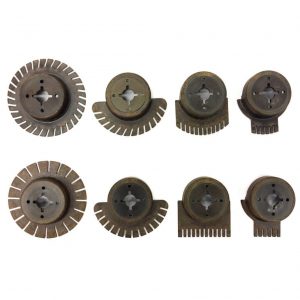
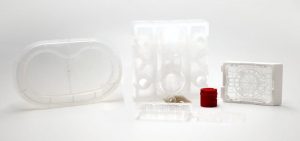
EnduroSharp® Torlon® Gap Filler Removal (GFR) Discs are designed for use with a pneumatic tool. The tools provide aerospace maintenance professionals with an effective method of safely removing flexibilized epoxy gap materials as well as cutting or scoring thick elastomeric coatings without damaging composite substructures.

Usually sold in boxes of 4 we are offering, for a limited time, the opportunity to purchase a variety of 4 different style discs in one box.  Priced at $180 per box,, the EnduroSharp®  Gap Filler Removal (GFR) Discs are crafted from resharpenable Torlon® PAI, allowing for multiple uses and extended durability.

The EnduroSharp® Gap Filler Removal Disc Combo Pack are Torlon® rotary cutting tools that effectively eliminate sealants, adhesives, and coatings without causing abrasion to underlying substrates, paints, primers, or metal surfaces. It achieves a thorough cleaning without the need for chemical solvents, thereby reducing chemical waste and minimizing exposure risks.

For more detailed information about the EnduroSharp® Torlon® Gap Filler Removal Disc Combo Pack and how EnduroSharp® tools can save you time and money in aircraft maintenance, please reach out to Aileen Crass,  Marketing Manager at [email protected] or visit our website at www.performanceplastics.com/endurosharp.

Equip yourself with the EnduroSharp® Gap Filler Removal Discs and experience a cutting-edge solution for efficient and effective aircraft maintenance.

Resin compounds play a crucial role in various aerospace applications due to their lightweight, high-strength, and durable properties. They are commonly used in the aerospace industry for manufacturing components such as aircraft structures, interior components, propulsion systems, and more. Here are some key points about the use of resin compounds in aerospace applications:

  1. Composite Materials: Resin compounds are often used as matrix materials in composite structures. Composite materials are made by combining reinforcing fibers (such as carbon fibers, glass fibers, or aramid fibers) with a resin matrix. These materials provide a high strength-to-weight ratio, making them ideal for aerospace applications where weight savings are critical.
  2. Fiber Reinforced Polymers (FRP): In addition to carbon fibers, other types of fibers like glass and aramid are used in aerospace composites. Glass fiber reinforced polymers (GFRP) are used in applications that require good corrosion resistance, while aramid fiber reinforced polymers (AFRP) are known for their impact resistance.
  3. Thermosetting Resins: Epoxy resins are one of the most commonly used thermosetting resins in aerospace applications due to their excellent mechanical properties, high heat resistance, and low shrinkage during curing. They are often chosen for critical structural components.
  4. Thermoplastic Resins: Thermoplastic composites are gaining popularity in aerospace due to their improved impact resistance, damage tolerance, and recyclability. They can be reheated and reformed, allowing for potential repairs or reshaping of components.
  5. Adhesives and Bonding: Resin-based adhesives are used for bonding various components in aerospace manufacturing, including joining composite panels, attaching metal components, and creating strong bonds between dissimilar materials.
  6. Fire Resistance: Fire-resistant resins are essential for aerospace applications to ensure the safety of passengers and crew. Fire-resistant resins are often used in interior components, like cabin walls and flooring, to meet stringent safety standards.
  7. Repair and Maintenance: Resin-based materials are also used for repairing and maintaining aircraft and spacecraft structures. Composite repair patches and epoxy-based sealants can extend the life of aerospace components.
  8. Design Flexibility: Resin compounds offer design flexibility, allowing engineers to create complex shapes and optimized structures that might not be achievable with traditional materials.

It’s worth noting that the aerospace industry has stringent regulations and standards for the use of materials in aircraft and spacecraft. The choice of resin compound and its application must meet these requirements to ensure safety, reliability, and performance in various aerospace environments.

For more information on resin compounds and their uses in Aerospace Manufacturing, please contact Rich Reed, Vice President of Sales & Marketing at [email protected], or visit our website at www.performanceplastics.com.

fluoropolymer is one of the growing number of fluorocarbon-based polymers. They are widely used in healthcare applications due to their biocompatibility, lubricity, sterilizability, chemical inertness, thermal stability, barrier properties and high purity. However, when compared with other resins, they are significantly more expensive and require special techniques to injection mold due to their shear sensitivity, high melt temperatures, and fluorine outgassing when melted.

Although the best-known fluoropolymer, polytetrafluoroethylene (PTFE or Teflon®), has been on the market since the 1940s, newer resins have been developed to address specific injection molding niches. Perfluoroalkoxy polymer (PFA) and fluorinated ethylene-propylene (FEP plastic) are among the most recent additions to the list of fluoropolymer options.

PFA was developed in order to create a true melt-processable fluoropolymer. It provides the smoothest and least wettable finish of all of the fluoropolymers. Its optical transparency, chemical inertness, and overall flexibility have made it popular for use in lab equipment. It also has superior electrical properties, with dielectric strength that’s three to four times greater than PTFE can offer.

Like PFA, FEP is melt-processable and injection moldable. Its melting point of 260 °C (500 °F) is about 40 degrees lower than PFA’s.  It offers low friction and chemical inertness properties comparable to PTFE’s. However, it is completely transparent. Because FEP is highly resistant to sunlight, it is especially useful for molding parts that are subjected to weathering.

However, not all injection molders are equipped to work with fluoropolymers like PFA and FEP. Performance Plastics LTD. has developed a variety of tools and procedures to address the challenges involved in molding these materials. For example, our solution includes a hot runner system and mold designed to minimize the shear forces inherent in the injection molding process. We use proprietary metallurgy that’s highly resistant to fluorine gas corrosion, which helps extend the working life of the hot runner system, tooling and other components that make contact with the melted resin. We’ve also developed a direct-gating, multi-runner approach to tool design that eliminates the sprue and runner used in traditional injection molding. By eliminating the wasted material associated with the sprue and runner, Performance Plastics has been able to pass along material cost savings of from 20% to 40% by using these expensive resins more economically.

Design for Manufacturing (DFM) is a crucial aspect of the plastic injection molding process. It involves optimizing the design of a plastic part to ensure that it can be easily and cost-effectively manufactured using injection molding techniques. Here are some key considerations and guidelines for DFM in plastic injection molding:

Part Geometry and Complexity:

  • Keep the part geometry simple and avoid intricate features that could complicate the molding process or require complex tooling.
  • Minimize the use of undercuts, sharp corners, and thin walls to prevent molding defects and challenges in ejection.

Draft Angle:

  • Incorporate draft angles (tapered surfaces) on vertical walls to facilitate easy ejection of the part from the mold.
  • A typical draft angle is around 1-2 degrees per side, but this may vary based on the material and part design.

Wall Thickness:

  • Maintain uniform wall thickness throughout the part to ensure proper flow of molten plastic and reduce the risk of sink marks, warping, or voids.
  • Avoid sudden transitions between thick and thin sections, as this can lead to molding defects.

Ribs and Bosses:

  • Use ribs to reinforce thin sections of the part and add structural integrity.
  • Design bosses (protruding features) with appropriate wall thickness and draft angles to ensure good mold filling and easy part ejection.

Corners and Fillets:

  • Incorporate rounded corners and generous fillet radii to distribute stress and prevent stress concentrations that could lead to part failure.

Material Selection:

  • Choose a suitable plastic material for the intended application, considering factors such as mechanical properties, chemical resistance, temperature stability, and more.

Gating and Venting:

  • Position the gate (entry point for molten plastic) in a location that minimizes aesthetic defects and ensures uniform filling.
  • Provide adequate venting to allow air and gases to escape during injection, preventing voids and trapped air.

Texture and Surface Finish:

  • Consider the desired texture or surface finish early in the design process, as this may impact mold design and material flow.
  • Textures can help hide imperfections and improve aesthetics.

Tolerances:

  • Specify realistic tolerances that are achievable through the injection molding process.
  • Avoid tight tolerances that could increase manufacturing costs and lead to rejects.

Moldability Analysis:

  • Conduct mold flow analysis using simulation software to identify potential issues and optimize the part design before production.
  • Address potential concerns such as weld lines, air traps, and flow imbalances.

Tooling Considerations:

  • Collaborate closely with the tooling manufacturer to ensure the mold design aligns with the part design and material properties.
  • Optimize the number and complexity of mold cavities based on production volume requirements.

Assembly and Post-Processing:

  • Design parts for easy assembly by incorporating features like snap fits, self-locating tabs, and mating surfaces.
  • Minimize the need for secondary operations or post-processing steps.

By following these design principles and collaborating with experienced injection molding professionals like Performance Plastics, you can create plastic parts that are well-suited for efficient and cost-effective manufacturing through the injection molding process.

For more information on Design for Manufacturing and its use, please contact Rich Reed, Vice President of Sales & Marketing at [email protected], or visit our website at www.performanceplastics.c

Reshoring

According to the American Manufacturing Resurgence Poll, 48% of CEOs have restored some or all of their operations.

Reshoring refers to the process of bringing back manufacturing or other business operations to the domestic country from overseas locations. Transferring molds from Asia back to the United States has been a huge topic post-Covid.  In a post-COVID environment, reshoring can offer several benefits, particularly in light of the disruptions and challenges that the pandemic exposed in global supply chains. Here are some potential benefits of reshoring in a post-COVID world:

  • Supply Chain Resilience: The COVID-19 pandemic highlighted vulnerabilities in global supply chains, as lockdowns, travel restrictions, and disruptions to transportation led to delays and shortages. Reshoring can help reduce dependence on distant suppliers and mitigate the risk of similar disruptions in the future, leading to greater supply chain
  • Reduced Lead Times: Shorter supply chains associated with reshoring can lead to reduced lead times, allowing companies to respond more quickly to changes in demand and market conditions. This agility is especially valuable in a rapidly changing post-pandemic business landscape.
  • Quality Control: When operations are brought closer to home, it becomes easier to implement and enforce stringent quality control This can lead to higher product quality, fewer defects, and improved customer satisfaction.
  • Innovation and Collaboration: Proximity to manufacturing operations fosters collaboration between different departments, such as design, engineering, and production. This can lead to increased innovation, as teams can work closely together to develop and refine products.
  • Trade Cost Savings: Reshoring can reduce or eliminate costs associated with international shipping, customs duties, and other trade-related expenses, potentially leading to cost savings for companies.
  • Risk Mitigation: Having production facilities in multiple geographic locations can diversify risks and reduce exposure to disruptions caused by localized events, such as natural disasters or geopolitical tensions.

It’s important to note that while reshoring offers various benefits, it may not be suitable for every industry or company. The decision to reshore should be based on a thorough analysis of factors such as cost, labor availability, skill sets, regulatory environment, market demand, and more. Reshoring is just one strategy that companies can consider as they adapt to the evolving global business landscape in the wake of the COVID-19 pandemic.

For more information on how Performance Plastics can assist in reshoring your mold, please contact Rich Reed, Vice President of Sales and Marketing at [email protected], or visit our website at www.performanceplastics.com.


Torlon Sealant Removal Cutter

Using adhesives for connection technology has many benefits. It is cost-efficient, and fast, and allows homogeneous stress distribution between the bonded surfaces.

Adhesively bonded surfaces consist generally of two joined components and a layer of adhesive between them. The most important part of the bond is the adhesive itself, followed by the preparation process that precedes the application of the adhesive. The adhesive bonding process requires its own special process, which involves three main aspects: qualified methods/processes, trained operators, and dedicated tools.

The benefits of adhesive bonding include:

  • Expresses weight savings with the elimination of rivets or other stress concentrations
  • More evenly distributed stresses
  • Excellent fatigue resistance
  • Increased compliance with critical tolerances
  • Enables joining of dissimilar base materials.

Any professional who works with adhesives knows surface preparation is the most vital element of achieving high bond strength and optimizing durability and lifespan.  Different substrate materials require different types of preparation, but all must remove intermediate surfaces cleanly and thoroughly.

Patented EnduroSharp® Torlon® maintenance tools, exclusively from Performance Plastics, are the correct, dedicated tools for surface preparation.  They are non-metallic scraper tools that quickly and effectively remove silicone, sealants, adhesives, and coatings while keeping an effective edge and not damaging underlying materials.


Developed from Torlon® polyamide-imide, EnduroSharp tools hold a superior edge, are resharpenable, remove unwanted materials and protect expensive projects.

For more detailed information about the EnduroSharp® line of tools and how they can save you time and money in maintenance, please reach out to Rich Reed, Vice President of Sales and Marketing, at [email protected] or visit our website at www.performanceplastics.com/endurosharp.


Expertise plays a vital role in precision injection molding. Precision injection molding involves the production of high-quality, complex, and intricate plastic parts with tight tolerances. It requires specialized knowledge, skills, and experience to achieve consistent and accurate results.

Here are some reasons why expertise is critical in precision injection molding:

  1. Tooling Design: Expertise in precision injection molding includes a deep understanding of tooling design. This involves designing molds with precise cavities, gates, runners, and cooling systems to ensure optimal part quality and dimensional accuracy.
  2. Material Selection: Knowledge about different types of plastic materials and their properties is crucial. Experts can select the most suitable material based on the specific requirements of the part, such as strength, flexibility, heat resistance, or chemical resistance. This helps in achieving the desired functionality and durability.
  3. Process Optimization: Injection molding experts have in-depth knowledge of process parameters, such as temperature, pressure, and injection speed. They can optimize these parameters to ensure consistent part quality, minimize defects like warping or sink marks, and reduce cycle times.
  4. Troubleshooting: Even with careful planning, issues can arise during the injection molding process. Expertise allows for effective troubleshooting and problem-solving. Experienced professionals can identify and resolve issues like air traps, short shots, flash, or dimensional variations, ensuring that the final parts meet the required specifications.
  5. Quality Assurance: Precision injection molding demands stringent quality control. Experts can develop and implement robust inspection and testing protocols to verify part dimensions, surface finish, and other critical parameters. This helps in maintaining consistent quality and meeting customer expectations.
  6. Cost Optimization: Expertise in precision injection molding can help in optimizing costs. By fine-tuning the process, reducing scrap rates, and minimizing cycle times, experts can enhance efficiency and reduce overall production costs.

Precision injection molding requires a high level of expertise to achieve accurate and consistent results. Performance Plastics possesses the knowledge and experience of experts in areas such as tooling design, material selection, process optimization, troubleshooting, quality assurance, and cost optimization are crucial for producing high-quality plastic parts with tight tolerances.

For more information on how Performance Plastics can offer expertise on your next Precision Injection Molding project, please contact Rich Reed, Vice President of Sales & Marketing at [email protected] or visit our website at www.performanceplastics.com/capabilities.


Introducing the EnduroSharp® TSR Cutter, specifically designed for larger aircraft maintenance applications. Made from resharpenable Torlon®, the SR Cutter is the newest addition to the EnduroSharp® line of tools.

EnduroSharp® TSR Cutters are specially engineered to handle challenging tasks such as the removal of sealants and adhesives from aircraft wing fuel tanks and around fasteners like rivets, hi-loks, and bolts. Unlike competitors’ tools made from simple plastic, the EnduroSharp® TSR Cutter is crafted from resharpenable Torlon® PAI, allowing for multiple uses and extended durability.

The EnduroSharp® TSR Cutter is a Torlon® rotary cutting tool that effectively eliminates sealants, adhesives, and coatings without causing abrasion to underlying substrates, paints, primers, or metal surfaces. It achieves a thorough cleaning without the need for chemical solvents, thereby reducing chemical waste and minimizing exposure risks.

For more detailed information about the EnduroSharp® Torlon® TSR Cutter and how EnduroSharp® tools can save you time and money in aircraft maintenance, please reach out to Rich Reed, Vice President of Sales and Marketing, at [email protected] or visit our website at www.performanceplastics.com/endurosharp.

Equip yourself with the EnduroSharp® TSR Cutter and experience a cutting-edge solution for efficient and effective aircraft maintenance.


In order to ensure the safety of medical devices, USP Class VI testing is required.  Developed by the United States Pharmacopeia, the Class VI test is a specific test conducted on medical devices to assess their biocompatibility.  It is designed to evaluate the potential adverse biological effects of the materials used in a medical device when they come into contact with living tissues or bodily fluids. Performance Plastics is proud to announce we have passed the test – we now offer material and process expertise.

The USP Class VI test is particularly important for medical devices that directly or indirectly interact with the human body, such as implants, surgical instruments, catheters, and tubing. The test helps to ensure that these devices are safe and do not cause harmful reactions or toxicity when used in clinical settings.

Here are a few key reasons why the USP Class VI test is conducted on medical devices:

  1. Patient Safety: The primary objective of the USP Class VI test is to ensure patient safety. By assessing the biocompatibility of the materials used in medical devices, it helps identify any potential risks or adverse reactions that may occur when the device is used in the human body.
  2. Regulatory Compliance: Compliance with regulatory standards is a crucial aspect of the medical device industry. Many regulatory bodies, including the U.S. Food and Drug Administration (FDA), require medical device manufacturers to demonstrate the biocompatibility of their products. Conducting the USP Class VI test helps meet these regulatory requirements.
  3. Material Selection: The USP Class VI test aids in material selection for medical devices. It helps manufacturers evaluate different materials and determine which ones are the most suitable in terms of biocompatibility. This allows them to make informed decisions about the materials used in their devices, minimizing the risk of adverse reactions.
  4. Product Development and Improvement: The test is also valuable during the product development and improvement stages. By identifying any potential biocompatibility issues early on, manufacturers can modify or optimize their device design or materials to enhance safety and efficacy.
  5. Industry Standard: The USP guidelines are widely recognized and accepted within the medical device industry. Conducting the USP Class VI test demonstrates a commitment to quality and safety, providing confidence to healthcare professionals, regulatory bodies, and end-users.

It’s worth noting that the USP Class VI test is just one of several tests and evaluations conducted to assess the biocompatibility of medical devices. Other tests, such as cytotoxicity, sensitization, and irritation tests, may also be performed depending on the specific device and its intended use.

For more information on Class VI testing and how Performance Plastics can assist in certifying your medical device, please contact Rich Reed, Vice President of Sales & Marketing at [email protected], or visit our website at www.performanceplastics.com.

PEEK Resin Thermoplastic Component

Engineered Plastic Medical Devices are revolutionizing the healthcare industry. The growth of polymers has transformed the marketplace, with plastic medical devices steadily replacing other materials such as glass, ceramics, and metals, wherever applicable.

Peek (Polyether Ether Ketone) plastics are widely used in the medical device industry due to their excellent mechanical properties, biocompatibility, and resistance to chemicals and high temperatures. Here are some ways Peek plastics are used in medical devices:

  1. Implants: Peek is commonly used in orthopedic implants, such as spinal fusion cages, joint replacements, and trauma fixation plates. Its mechanical properties closely resemble those of bone, making it an ideal material for load-bearing applications. Peek’s biocompatibility allows it to integrate well with the surrounding tissue.
  2. Dental Applications: Peek is used in dental applications like dental implants, temporary crowns and bridges, orthodontic brackets, and dental surgical instruments. It provides good strength and stability, and its tooth-colored variants offer aesthetic benefits.
  3. Surgical Instruments: Peek is utilized in the manufacturing of surgical instruments, including forceps, retractors, and endoscopic components. Its high strength, durability, and resistance to sterilization methods such as autoclaving make it suitable for repeated use.
  4. Medical Device Housings: Peek is used for the housing and structural components of various medical devices, such as handheld surgical tools, electronic devices, and monitoring equipment. Its mechanical strength, resistance to sterilization, and biocompatibility make it suitable for these applications.
  5. Ophthalmic Devices: Peek is used in the manufacture of intraocular lenses (IOLs), which are artificial lenses implanted in the eye during cataract surgery. Peek’s optical clarity, biocompatibility, and resistance to degradation within the eye make it a preferred material for IOLs.

Peek plastics offer several advantages for medical devices, including their radiolucency (compatibility with X-rays), high strength-to-weight ratio, chemical resistance, and biocompatibility. These properties make Peek a versatile and reliable material choice in various medical applications.

For more information on PEEK and its use in medical applications, please contact Rich Reed, Vice President of Sales & Marketing at [email protected], or visit our website at www.performanceplastics.com.