Correctly and efficiently performing aircraft maintenance requires the correct tools.  Patented EnduroSharp® Torlon® aircraft maintenance tools, exclusively from Performance Plastics, are the correct tools.  They are non-metallic scraper tools that quickly and effectively remove silicone, sealants, adhesives, and coatings while keeping an effective edge and not damaging underlying materials.

At the time of development, many nonmetallic scrapers were available and approved for various material removal applications. But, the effectiveness of the existing tools varied, and the tools were generally inefficient & short-lived. Some even pose a great risk to the underlying structures.

Under contract with the Air Force Research Laboratory’s Materials Integrity Branch (AFRL/RXSA), the University of Dayton Research Institute (UDRI) developed the EnduroSharp® line of Torlon® material removal tools.

After sampling available tools on the market for material and design, the material Torlon® by Solvay was chosen, along with a spiral-fluted design for the GFR Bit. Torlon® is a polyamide-imide (PAI) resin that is a high-end niche material that proved to be ideal for the application.  Initially, three types of tools were developed:

  • Gap Filler Removal Bits (GFR Bit)
  • Torlon Scraper Blade (TSB)
  • Torlon Gap Blade (TGB)

All three tools were extensively tested and summarized. It was concluded that Torlon® was indeed a great material for the application.  The material offered significantly less damage potential than other often-used tools.  It offered faster material removal rates and required less operator effort.  Additionally, the material proved to be resharpenable.

At the request of our users, EnduroSharp® is soon to release our new TSR Cutter, The Torlon Sealant Remover Cutter (TSR) is a rotary cutter designed to safely remove thick layers of sealants and adhesives from larger areas, such as fuel cells, without damaging the underlying coatings and surfaces.

The EnduroSharp® line is offered by over 100 organizations and is under evaluation for 11 weapons systems at 10 DoD locations.

For more information on the EnduroSharp® line of products, please contact Rich Reed, Vice President of Sales & Marketing at [email protected], or visit our website at www.performanceplastics.com.


A Mold flow analysis is a software simulation that can show how resin will fill the mold during the injection molding process. By understanding material fill, injection mold designers can better position gates, anticipate where knit lines will appear, and locate difficult-to-fill spots in the mold.

The predictive process of mold flow analysis can uncover design issues, save resources, allow for preemptive correction, speed up overall cycle time, and present your business with an abundance of benefits. Mold flow analysis is essential to ensure that a mold can produce the strongest and most consistent parts.

Here are our top six reasons why you should always perform a mold flow analysis:

  1. Optimization of Design

Without the investment of tooling or molding, all the what-if questions can be addressed ahead of time. Mold flow analysis can point out many concerns or production factors, including:

  • Material selection issues
  • Thickness/thinness problems
  • Structural concerns
  • Residual or structural stress issues
  • Filling concerns
  1. Quick & Immediate Decisions

With mold flow analyses, you can make immediate, informed decisions. These decisions can impact multiple areas of the process including:

  • Product design
  • Material and process selection
  • Tooling
  1. Optimization of Injection Molds and Tooling

You will have all the information upfront to make the most optimal choices in injection molds and tooling to create the perfect product. Mold flow analysis can show you everything you need:

  • The optimal gate locations
  • Balanced filling and packing
  • Cavity layout
  • The best cooling layouts
  • Structural and thermal analyses for tool life
  1. Trying Different Materials

You’re able to test out different materials and designs without building any prototype parts or tools. You can get virtual parts with a simulation as well, so you can have a full process simulation with minimal upfront investment.

  1. Optimize Overall Cycle Time

Mold flow analyses can optimize your overall cycle time by up to 10-30%. That reduction percentage on just one part can cancel out the cost of a complete flow analysis of multiple molded parts!

  1. Specification

Plastic parts can be optimized for exact machine specification, cycle time, cooling, DOE, and more, without reducing production time or putting any tools on molding machines; this can help improve your bottom-line profit.

The predictive process of mold flow analysis can uncover design issues, save resources, provide for preemptive correction, speed up overall cycle time, and present your business with an abundance of benefits.

Performance Plastics provides mold flow analysis to help your business improve manufacturing processes by saving time and money. For more information on how mold flow analysis can provide simplicity and quality to products, please contact Rich Reed, Vice President of Sales & Marketing at [email protected], or visit our website at www.performanceplastics.com.


Micro injection molding is a specialized form of injection molding that is used to produce small, intricate parts with high precision and accuracy, It has gained significant attention in various industries, including medical devices, electronics, automotive, and aerospace/defense.  In recent years, several innovations have emerged in micro injection molding, improving its capabilities, and expanding its applications.

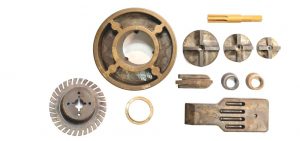
  • Advanced Tooling: Innovations in micro injection molding tooling have significantly contributed to improved part quality and increased production efficiency. High-precision molds with complex geometries and tight tolerances can now be manufactured using advanced machining techniques like micro-milling and electrical discharge machining (EDM). These techniques enable the creation of intricate features and microstructures in molds, producing highly detailed micro parts.
  • Material Selection: Micro injection molding has benefited from the development of new materials specifically designed for small-scale molding. These materials offer enhanced flow properties, dimensional stability, and improved mechanical properties. They include specialized engineering plastics such as high-temperature thermoplastics. The availability of a broader range of materials expands the potential applications of micro injection molding.
  • Process Monitoring and Control: The integration of advanced sensors and monitoring systems has improved the control and consistency of the micro injection molding process. Real-time monitoring of key process parameters, such as temperature, pressure, and flow rate, allows for better process optimization and early detection of issues. Closed-loop feedback systems can automatically adjust process parameters to maintain consistent part quality, reducing scrap rates and improving overall productivity.
  • Microfluidic Devices: Micro injection molding has found extensive use in the production of microfluidic devices, which are used in applications like medical diagnostics, chemical analysis, and drug delivery systems. Innovations in microfluidic design and fabrication techniques have enabled the integration of complex fluid channels, valves, and sensors into small, disposable devices. Micro injection molding provides a cost-effective and scalable manufacturing method for producing these devices with high precision and reproducibility.
  • Multi-Material and Overmolding: Recent innovations in micro injection molding have focused on enabling multi-material molding and over-molding processes. Multi-material molding allows for the integration of different materials or colors within a single micro part, expanding design possibilities and functionality. Overmolding, on the other hand, involves molding one material over another, creating bonded layers or adding soft-touch grips to parts. These capabilities enhance the versatility and aesthetics of micro-injection molded products.
  • These innovations in micro injection molding have expanded its capabilities, enabling the production of smaller, more complex parts with improved quality and functionality.

Micro injection molding is widely applied for parts and devices in medical, pharmaceutical, electronics, automotive, optical, and other industries. In general, the medical micro injection molding market is the leading one, due to an increase in the usage of sophisticated micro components for endoscopic surgery, minimally invasive treatments, and other advanced technology developments.

Performance Plastics are experts in precision injection molding.  We have developed proprietary tooling, unique metallurgy equipment, and processes that produce custom-molded plastics such as fluoropolymers, Ultem®, PEEK, and Torlon®.  We leverage our high-performance polymer expertise and technology to develop thermoplastic compounds and techniques to deliver the best possible results on our projects.

For more information on how micro molding can benefit your application, please contact Rich Reed, Vice President of Sales & Marketing at [email protected] or visit our website at www.performanceplastics.com.


Family_Mold

A family mold is a mold that produces different parts using the same base.  There can be multiple cavities for different part numbers.  Family molds often have a building cost advantage over molds dedicated to a single part number.

A common usage is to combine two halves of housing into a family mold. Halves are purchased in sets which makes running them together a good option.  They don’t have to be run together, so a shut-off runner must be included which allows one or more cavities to be turned off during production.

Family molds are often more practical than dedicated molds with moderate production volumes, whereas dedicated multiple cavities would be more expensive.  But family mold layout design is demanding and requires experience when dealing with advanced materials.

There are big differences between the properties, processing methods, and applications of various advanced materials.  Engineers need to understand the properties of the materials when using a family mold.  All advanced materials have benefits and deficiencies, so this understanding is key to the success of a project.

The conditions encountered when forcing molten plastic through a mold’s sprues, runners, and gate change as the mold becomes larger, and more complex, which impacts the molding process and material quality.  Thermal variations within a family mold become more of a concern, increasing the risk of partially filled cavities as well as part deformation.

Performance Plastics are experts in precision injection molding.  We have developed proprietary tooling, unique metallurgy equipment, and processes that produce custom-molded plastics such as fluoropolymers, Ultem®, PEEK, and Torlon®.  We leverage our high-performance polymer expertise and technology to develop thermoplastic compounds and techniques to maximize your family mold and provide the best quality on your mold investment.

For more information on family molds and how they can benefit your application, please contact Rich Reed, Vice President of Sales & Marketing at [email protected] or visit our website at www.performanceplastics.com.


Injection molds are one of the most significant investments a manufacturer can make.  The lifespan of the injection mold depends on several factors; the design and construction of the mold, the type of material being molded, the operating conditions, and the maintenance practices employed.  Generally, high-quality molds are built to be durable and last for a significant period.  Below are some factors that affect the longevity of injection molds:

  • Operating Conditions – The conditions in which your injection mold operates have a corresponding effect on the lifespan of your mold. Will the mold be used in dirty or harsh environmental conditions?  Or is it run in a clean, sanitary environment? Dirt can take a toll on your mold.
  • Time between production runs – In general, the less time between runs the shorter the lifespan of your mold will be. The result of less time between runs is that molds may be less likely to get full mold maintenance between each cycle.
  • Cycle times – Longer, slower cycle times can be less taxing on your molds, which in turn may help them last longer. The length of your cycle time is largely dependent on elements of your design, including wall thickness, as well as design complexity.
  • Injection mold material – The materials used to create your mold will also play a role in its longevity. Aluminum molds, for instance, won’t last as long as their steel counterparts. The materials being molded also play a role in longevity, as some materials will be harder on molds than others.

It’s important to mention that the lifespan of an injection mold is not solely determined by the number of cycles but also by the overall condition and functionality of the mold.  Factors such as wear, damage, and changes in the molding material or production requirements can necessitate repairs.

Performance Plastics are experts in precision injection molding.  We have developed proprietary tooling, unique metallurgy equipment, and processes that produce custom-molded plastics such as fluoropolymers, Ultem®, PEEK, and Torlon®.  We leverage our high-performance polymer expertise and technology to develop thermoplastic compounds and techniques to maximize your mold and provide the best ROI on your mold investment.


Torlon is a high-performance polymer that is often used in precision industrial applications due to its exceptional mechanical and thermal properties. It is a brand name for polyamide-imide (PAI), a thermoplastic material that exhibits excellent strength, stiffness, and dimensional stability.

Here are some key characteristics and advantages of Torlon in precision industrial applications:

  1. High Strength and Stiffness: Torlon has a high strength-to-weight ratio and exceptional rigidity, making it suitable for applications that require structural integrity and resistance to deformation under heavy loads.
  2. Dimensional Stability: Torlon maintains its dimensional stability even under elevated temperatures, which is crucial in precision applications where tight tolerances and accurate fit are required. It has a low coefficient of thermal expansion, reducing the risk of dimensional changes due to temperature fluctuations.
  3. Chemical Resistance: Torlon is highly resistant to a wide range of chemicals, including acids, solvents, fuels, and oils. This chemical resistance makes it suitable for applications in chemical processing, oil and gas, and other industries where exposure to corrosive substances is a concern.
  4. High-Temperature Resistance: Torlon retains its mechanical properties at elevated temperatures, with a glass transition temperature (Tg) of approximately 280°C (536°F) and a melting point of around 310°C (590°F). This thermal stability allows it to perform reliably in high-temperature environments.
  5. Low Friction and Wear Resistance: Torlon exhibits excellent tribological properties, including low friction and wear resistance. This makes it suitable for applications that involve sliding or rotating components, such as bearings, bushings, and wear pads.
  6. Electrical Insulation: Torlon is an excellent electrical insulator, offering high dielectric strength and low electrical conductivity. It is often used in electrical and electronic components where insulation and electrical performance are critical.
  7. Machinability: Torlon is known for its machinability, allowing it to produce complex shapes and precise components. It can be easily machined using conventional machining techniques, including milling, turning, drilling, and grinding.

Due to its exceptional properties, Torlon is commonly found in industries such as aerospace, automotive, electronics, oil and gas, chemical processing, and various other high-performance applications that demand precision, reliability, and durability.

For more information on Torlon or how a high-performance polymers can benefit your application, please contact Rich Reed, Vice President of Sales and Marketing at [email protected] or visit our website at www.performanceplastics.com.

When using a tool for maintenance, it is important to use the right tool to perform the task the right way.  Using the incorrect tool wastes time, reduces efficiency, and puts the maintainer at risk of injury. Take for example a tool as basic as a scraper blade.  Not all scraper blades are made of the same material and provide the same functionality.  Some of the most common types of scraper blades on the market include Phenolic, Celcon®, Glass Filled Nylon, and Torlon®.


Phenolic Scraper Blades

Phenolic scraper blades come in assorted shapes, colors, and sizes.  Phenolic scrapers are commonly used for removing sealants, adhesives, stickers, labels, grime, and more.  Phenolic materials are the result of polymerization between layers of paper, canvas, linen, or glass cloth impregnated with a synthetic thermosetting resin.  It offers high resistance to flexing but does not offer the ability to be resharpened.  It will curl, peel and melt when attempting to resharpen.  Additionally, Phenolic may cause irritation to the skin, eyes, nose throat, and nervous system, so it is not ideal for use in incremental or heated material removal.
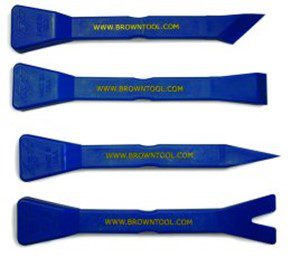
 

Celcon® Plastic Scraper Blades

Celcon® plastic scraper blades are currently approved by several MROs and are made of semi-crystalline thermoplastics that offer high tensile strength, stiffness, and toughness and may retain a sharp edge.  They are resistant to hot water and some solvents and are useful for sealant application, removal, and paint removal.  They are not, however, useful with newer aviation adhesives, or high-heat applications as they melt easily.  Celcon® dust may cause irritation in the upper respiratory tract when used at normal processing temperatures.
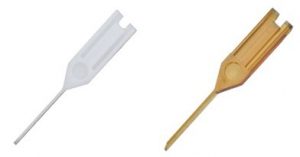
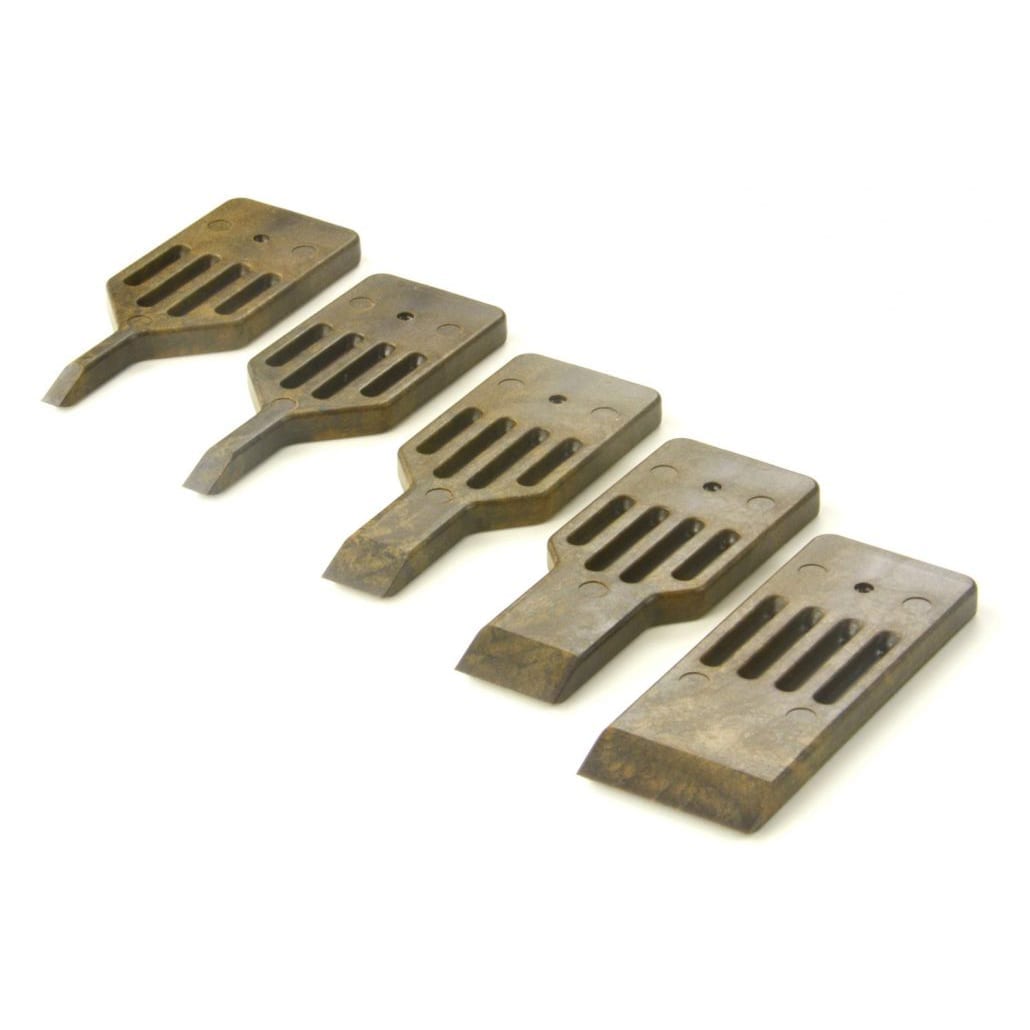


Glass-Filled NylonScraperBlades

Glass-filled nylon scraper blades are thermal polymers that hold a very sharp and hard edge.  It is far less likely to mar surfaces, but it is not categorized as non-marring.  Can sometimes often be reshaped, but edges tend to wear when prying.  Can not be re-sharpened. Resists chemicals and solvents with minimal degradation.  While adding glass to the nylon makes it substantially stronger, with superior tensile strength it is also substantially more brittle, abrasive, and heavier.


Torlon Scarper Blades

Torlon® scraper blades hold a superior edge, remove unwanted materials, and protect the underlying substrates.  Torlon® is a non-marring, high-strength, high-temperature polymer and is cured to produce a thermoset polymer.  As a thermoset, it is resharpenable, lightweight, chemically resistant, and safe for people under normal conditions.

EnduroSharp® offers a full line of Torlon® Aircraft Maintenance Tools that make the removal of sealants and adhesives more efficient.

For more information on the new EnduroSharp® Gap Blade & Scraper Blade kit, or any of our EnduroSharp® product lines, please contact Aileen Crass at [email protected] or visit our website at www.performanceplastics.com/endurosharp.


Strong, lightweight plastics enable us to live better while contributing to sustainability in many ways—all which stem from plastics’ ability to help us do more with less.

Plastics help us protect the environment by reducing waste, lowering greenhouse gas emissions, and saving energy at home, at work, and on the road. Plastic packaging helps to dramatically extend the shelf life of products while allowing us to ship more with less packaging material—reducing both product and packaging waste.

Plastics have a great environmental profile.  Only 4% of the world’s oil production is used for plastics and it takes much less energy to produce compared to other materials.  Plastics are durable, lightweight, and adaptable, now being used in projects that used to require metal materials.

Plastic adhesives, sealants, tools, and other building products are making our lives significantly more energy efficient while reducing costs. Plastics are building blocks of many value chains including healthcare, aviation, packaging, and increasingly the recycling industry. Sustainable plastic manufacturing conducts business in a way that drives value for society, the environment, and industry.

High-Performance plastics offer superior product quality in terms of durability, reusability, and recyclable quantities.  They are used in a wide range of multi-use applications and durable applications and are frequently used to replace other materials such as metal, wood, and glass.


EnduroSharp® has changed the way aerospace maintenance professionals remove sealants and adhesives from substrates and fasteners.

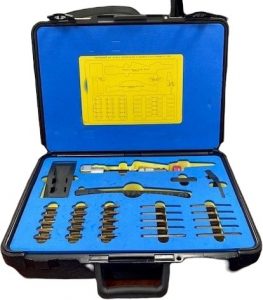
After receiving feedback from aircraft professionals,  EnduroSharp® has combined two of our most popular kits into one consolidated kit.  This kit offers the full selection of the EnduroSharp® gap blades, and EnduroSharp® scraper blades, packaged in one convenient carrying case.  We even included the sharper in the kit, so our maintainers would have all the tools they need in one handy case!

Traditionally, aerospace maintainers removed adhesives and sealants using tools that weren’t designed for the job.  Patented EnduroSharp® Torlon® aircraft maintenance tools were specifically designed for this task.  EnduroSharp® Tools are non-metallic scraper tools designed specifically to remove silicone, sealants, adhesives, and coatings.

Performance Plastics is a custom precision injection molder of high-performance, tight-tolerance thermoplastic components. We specialize in geometrically complex precision parts that consist of chemically inert materials. Our expertise led to the development of our patented EnduroSharp® line of Aircraft Maintenance Tools.

For more information on the new EnduroSharp® Gap Blade & Scraper Blade kit, or any of our EnduroSharp® product lines, please contact Aileen Crass at [email protected] or visit our website at www.performanceplastics.com.


A high-performance plastic is a resin that exhibits characteristics that make it a viable alternative to metals for use in industrial applications.  Characteristics include strength & durability, temperature resistance, electrical properties, lightweight, and versatility.  Overall, high-performance plastics can be custom designed to meet specific performance criteria and offer a wide range of benefits.

A gasket is a mechanical seal that fills the space between two or more mating surfaces to prevent leakage from or into joined objects under compression.  They extend the lifespan of moving parts by protecting against rubbing or friction.  Today, high-performance plastic gaskets are used as an alternative to metal gaskets as they offer great durability and corrosion resistance.  They are also lightweight, have low friction, and have good sealing and insulation properties.

The benefits of using a gasket made of high-performance plastics include:

  • Improved functionality and performance
  • Improved resistance to many chemicals
  • Improvement in vibration
  • Improved handling of temperature fluctuation
  • Improved impact resistance

High-performance plastic gaskets can be custom designed to meet specific performance criteria and offer a wide range of benefits depending on the application.

Performance Plastics has over 40 years’ experience in molding tight tolerance advanced plastics such as Fluoropolymers (FEP/PFA) Torlon, PEEK & Ultem for many industries.  We have developed proprietary processes enabling injection molding of parts that are thin walled, with tight dimensional tolerances and complex geometries.

For more information on high-performance plastic gaskets or other Performance Plastics’ services, please contact Rich Reed, Vice President of Sales & Marketing at 440-785-7122.