The shortage of glass has been an ongoing issue. Experts say the price of glass is on the rise as global supply chain issues continue throughout the world.  The glass shortage affects all industries that rely on glass for their containers, but right now, with the convergence of annual flu, the emergence of new COVID variants (Omicron), and the outbreak of Respiratory Syncytial Virus Infection (RSV) in children, the medical field is in dire need of glass for vials.

Silicon, which is one of the materials that is used in glass manufacturing has been in short supply for over a year.  Medical vials are made of Type I borosilicate glass, and this form uses the most silicon. The decreases in the recycling rates during the pandemic, are additionally hurting the production of glass vials.

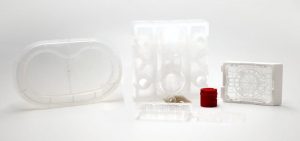
Fluoropolymers such as FEP, PFA, and PCTFE are great alternative materials for glass. These fluoropolymers are superior to conventional plastics. Their inert, non-reactive, and unmatched durability makes their properties ideal for use in the medical industry. These fluoropolymers are also non-stick, ensuring the product does not adsorb to surfaces. They are also virtually impervious to chemical, enzyme, and microbiological attacks. All the benefits of FEP, PFA, and PCTFE make these fluoropolymers a perfect material to create vials out of, especially since they are injection moldable.

At Performance Plastics, we have extensive experience in injection molding fluoropolymers. We have developed proprietary tooling and processes enabling the injection molding of small, thin-walled, complex parts. Our expertise in fluoropolymers and injection molding can be the solution to the shortage of glass.

For more information on how to use fluoropolymers as your glass shortage solution contact Rich Reed, our Vice President of Sales and Marketing, at (513) 321-8404 or [email protected].
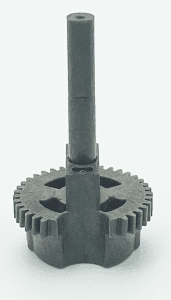
 

gears made out of Ryton plastic

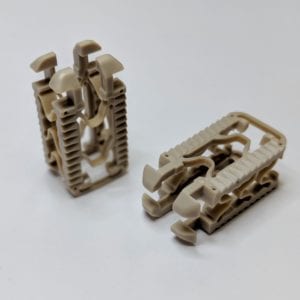
PEEK is a high-performance engineering plastic with outstanding resistance to harsh chemicals, excellent mechanical strength, and dimension stability. PEEK (Polyetheretherketone) is an organic thermoplastic polymer, comprised of a semi-crystalline structure which gives it a strong chemical structure.

PEEK is an excellent choice for industrial applications because of its ability to resist harsh conditions:

Resistant to a Wide Range of Chemicals: 

PEEK performs in the toughest chemical environments, capable of resisting more than 140 types of acids, bases, oils, liquids, salts, and elements.

 Immense Temperature Resistance: 

PEEK has an extremely high melting point at 662 °F. It can be used in applications with temperatures up to 482 °F. 

 Extended Resistance to Hydrolysis Process: 

Hydrolysis refers to the chemical process where water is added to a substance. PEEK has the ability to withstand exposure to steam and water for long periods of time without degrading.

 Great Durability: 

PEEK is tough, stiff, and extremely strong.  It has the capability to withstand friction and can perform for long periods of time without suffering from wear and tear.

PEEK is an optimal choice for industrial applications. Most industries see PEEK as the preferred material for parts that are used in extremely harsh application industries. These include oil and gas, mining, heavy equipment, and renewable energy.

Performance Plastics’ team of experienced engineers possesses the expertise to design and manufacture technically challenging projects and offer complex solutions within harsh application industries.

For more information on how Performance Plastics can assist in your material selection challenges, please contact Rich Reed, VP Sales & Marketing at 513.321.8404 or [email protected].


Every project has its own needs and goals.  Complex geometries involving fine details or sharp corners often cannot be achieved by traditional plastic molding. Advanced plastic injection molding processes allow designers to combine numerous complex features into a single component, reducing the need for secondary machining or surface finishing operations.

Plastic Injection molding allows design freedom not easily matched by other traditional processes.  Performance Plastics’ augments the latest software tools including solid modeling, mold flow analysis and finite element analysis with an internally developed iterative tool design approach to deliver complex geometries and densities superior to most other operations.

Our tooling modification process results in best-in-class part tolerances, particularly useful in molding mission critical parts where dimensional attributes need to be extremely precise.  We use this approach to produce net shape molded parts of exceptional quality, eliminating, or significantly reducing secondary matching operations resulting in material and process cost savings.

Performance Plastics, located in Cincinnati, OH has over 30 years’ experience in molding tight tolerance advanced plastics such as Fluoropolymers (FEP/PFA Torlon, Ryton plastic, Peek & Ultem) for many industries.  We have developed proprietary processes enabling injection molding of parts that are thin walled, with tight dimensional tolerances, and complex geometries.

For more information and solutions, please contact Rich Reed, Vice President of Sales & Marketing at 513-321-8404 or email [email protected].

PEEK or polyetheretherketone belongs to a family of polymers called polyketones or iPAEKs.  This means that is it built from the following building blocks:

  • ARYL
  • ETHER
  • KETONE

PEEK is one of the highest performing thermoplastics in the world.  Compared to metals, PEEK based materials are very light weight, easily shaped, resistant to corrosion and have considerably higher specific strength (strength per unit weight).

PEEK is optimal for aerospace applications because although it is a thermoplastic, it boasts heat resistance, little to no reaction against harmful chemicals and radiation, and comparable tensile and load strength to that of titanium and steel while being many times lighter.

PEEK® does not offer merely two or three properties that mark it as the polymer of choice for aerospace/defense; it has a whole variety of them.  They include:

  • High heat resistance

Tests have shown that PEEK polymer has a continuous use temperature of 260°C (500°F). This can make it suitable for use in a wide range of thermally aggressive environments.  PEEK tolerates friction and resists wear in dynamic applications like thrust washers and seal rings.

  • Chemically unreactive

PEEK resists the damage that can be inflicted in chemically aggressive operational environments. It can resist jet fuel, hydraulic fluids, de-icers and insecticides used in the aerospace industry.  This holds true over wide ranges of pressure, temperature, and time.

  • Mechanically strong

PEEK offers excellent strength and stiffness over a wide temperature range.  PEEK-based composites have specific strength many times that of metals and alloys.  “Creep” refers to a material becoming permanently deformed over an extended period when under constant applied stress. “Fatigue” refers to the brittle failure of a material under a repeated cyclic loading.  PEEK has both high creep and fatigue resistance thanks to its semi-crystalline structure and has been shown to be more durable than many other polymers and some metals over a long and useful lifetime.

  • Difficult to ignite or burn

PEEK has excellent flammability performance.  It resists combustion up to almost 600°C.  When it can be made to burn at very high temperatures, it will not support combustion and it emits little smoke. This is one reason why PEEK is widely used in commercial aircraft.

Aerospace/defense part manufacturers now use PEEK as a way to improve the weight and durability of their parts.  PEEK is a standard high-performance plastics in the aerospace/defense industry applications.

Performance Plastics’ team of experienced engineers possess the expertise to design and manufacture technically challenging projects and offer complex solutions within the aerospace/defense industries.

For more information on how Performance Plastics can assist in your material selection challenges, please contact Rich Reed, VP Sales & Marketing at 513.321.8404 or [email protected].

Performance Plastics specializes in the precision injection molding of technically complicated parts in advanced materials, eliminating the need to machine.

High performance plastic materials offer ideal properties when it comes to durability. Resins like polytetrafluoroethylene (PTFE/Teflon®) are known for their dielectric strength, low dissipation, chemical resistance, outstanding performance at elevated temperatures, and levels of coefficient friction. However, these unique properties can make molding some fluoropolymers quite difficult. Performance Plastics has found a way to offer the benefits of these materials by injection molding alternate fluoropolymers such as FEP and PFA.

At Performance Plastics, we are experts at precision injection molding. We have developed proprietary tool design software, processes and equipment enabling us to injection mold components having complex geometries made from challenging high-performance thermoplastic materials (PFA/FEP/PEEK®/PTFE) and highly loaded compounds. We utilize a unique combination of extensive material knowledge, mold flow analysis, a design system and process expertise to eliminate or minimize the need for secondary operations.

Switching from machining parts to injection molding parts can be very beneficial. Not only does injection molding help lower costs, but it also allows for highly efficient production, complexity in part design, and enhanced part strength. Injection molding produces uniformity, the ability to make millions of virtually identical parts.

Injection molding isn’t for every project, but it can be cost beneficial for applications producing more than 10,000 pieces of the same part year over year. At Performance Plastics, we serve a variety of industries, from medical & life science, aerospace & defense to diversified industrial.

To learn about how precision injection molding can replace machined parts, contact Rich Reed, our Vice President of Sales and Marketing, at (513) 321-8404 or [email protected].

Fluorinated ethylene propylene (FEP) is a copolymer of hexafluoropropylene and tetrafluoro ethylene that is chemically resistant, electrically stable, insulating and possesses useful low shielding properties.  It is easily formable and was developed as a melt processable material.

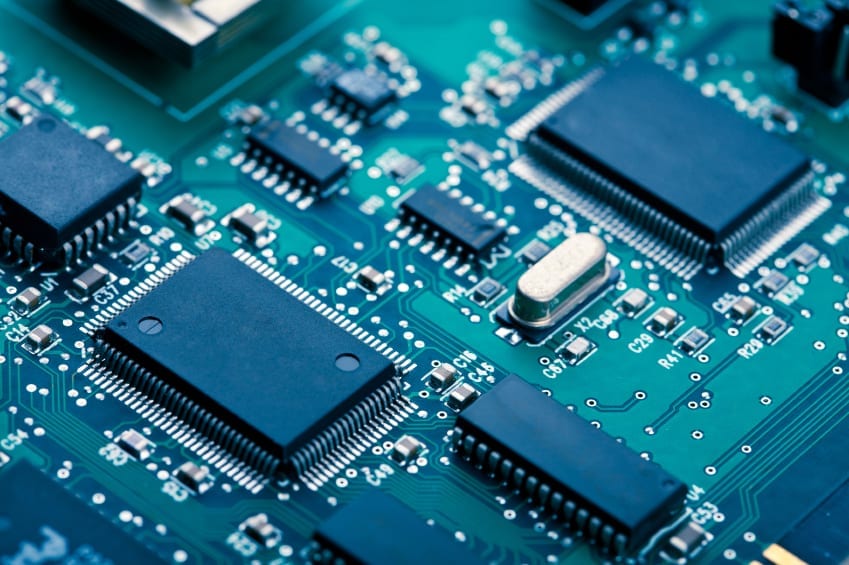
Semiconductors are the brains of electronics, enabling advances in countless applications and emerging technologies. The application of semiconductor devices can be found in almost every technology today, ranging from cars, phones, computers and much more. The manufacturing of semiconductors and semi-conductor related products require reliable, high purity materials that can survive harsh operating conditions.  The correct solution can increase production efficiency, reduce power requirements and increase process reliability.

FEP coatings are well suited for applications in the semiconductor industry where they are used in the manufacture of wafer carriers, sensors, seals, fittings and pump parts which are optimal for transporting high-purity chemicals in semiconductor manufacturing.

Key Material Properties for Semiconductor Applications

  • Reliable mechanical performance
  • Low levels of total organic carbon
  • High performance in pure deionized water
  • Low permeation rates
  • Resistance to both dry and wet process

For more information on FEP uses in Semiconductor manufacturing, please contact Rich Reed, Vice President of Sales & Marketing at 513.321.8404 or [email protected]

Precision and purity are key in the semiconductor industry.  Plastics help maintain high standards of precision and purity during semiconductor production, ensuring that less time and resources are wasted and that electronics function properly.

Since plastics are typically insulators, they may seem an unlikely material for use in semiconductor / electrical applications. However, in recent years, the composition of some plastic materials has been adapted to make these plastic materials behave as conductors or semi-conductors as opposed to insulators.

The semiconductor industry requires components that are manufactured from materials having a combination of heat resistance, conductivity, insulating, and shielding properties. All these properties are exhibited by high performance plastics. They are ideal materials with which to produce end products, as well as parts in the processing equipment used to manufacture semiconductors.

High performance plastics such as Fluorinated Ethylene Propylene (FEP), Polyether Ether Ketone (PEEK), and Polytetrafluoroethylene (PTFE), are characterized by their exceptional properties in different areas. High performance plastics are largely used where highest demands are placed on thermal or chemical resistance or product mechanics.

  • FEP – Fluorinatedethylenepropylene is a copolymer of hexafluoropropylene and   tetrafluoroetheylene;   boosts chemical resistance and useful low friction properties, and is  easily formable.  FEP is soft, slightly flexible, possesses a lower melting point of 260°C and is highly transparent and resistant to sunlight.  It is vastly superior in some coating applications involving exposure to detergents.


  • PEEK – Poly Ether Ketone  is a semicrystalline thermoplastic with exceptional high temperature performance, mechanical strength, and chemical resistance. It is capable of maintaining its stiffness at high temperatures and is suitable for continuous use up to 260°C (480°F). In addition, PEEK does not undergo hydrolysis and can be used for significantly long periods of time in areas where steam or water is common.


  • PTFE – Polytetrafluoroethylene is a tough, flexible, non-resilient material of average tensile strength with great thermal properties and excellent resistance to chemicals and passage of electric current. The coefficient of friction is unusually low and believed to be lower than any other solids. PTFE is an outstanding insulator over a wide range of temperatures and frequency.

Performance Plastics are specialists in high performance plastics engineering for the semiconductor industry. We partner with our customers to offer solutions to some of the most challenging applications.  For more information, please contact Rich Reed, Vice President of Sales & Marketing at 513.321.8404 or email [email protected].

Thermoplastic medical spinal implant component, precision thermoplastic medical check valve, non-contaminating Thermoplastic medical valve component, precision thermoplasticmedical spinal implant component, non-contaminating medical spinal implant component

High Precision, PEEK, Thermoplastic Medical Spinal Implant Component

PEEK® is an organic thermoplastic polymer that offers excellent mechanical and chemical resistance properties because of its chemical make-up.  PEEK® is short for polyether ether ketone, which means it’s a member of the polyaryletherketone family. These polymers are notable for their phenylene rings and oxygen bridges, which result in resilience, durability and strength.

PEEK® is great for medical applications because it is one of the few high-performance polymers that is a bio-material – it is highly resistant to radiation which allows for easy sterilization.

  • Biocompatibility – PEEK® is a proven biomaterial, which means it is considered safe for use with in vivo applications. PEEK® shows no signs of cytotoxicity, genotoxicity, or immunogenetics.  The material has been successfully in use for over 20 years.
  • A favorable flexural modulus – Compared to metals such as titanium, stainless steel and other metal biomaterials, PEEK® is much more flexible. It behaves much more like bone in how it flexes and bears weight.  It does not cause stress shielding in nearby bone.
  • Pure radiolucency – PEEK® renders transparent on X-rays, CT and MRI scans – which makes it easy for surgical teams to track the positioning of implants and detect complications.

Many medical device manufacturers now use PEEK® as a way to improve the biocompatibility of load bearing implants.  PEEK® is increasingly becoming the new standard biomaterial across a range of medical, orthopedic, and dental applications.

Performance Plastics’ team of experienced engineers possess the expertise to design and manufacture technically challenging projects and offer complex solutions within the medical industry.

For more information on how Performance Plastics can assist in your material selection challenges, please contact Rich Reed, VP Sales & Marketing at 513.321.8404 or [email protected].

When starting to produce a new product, it’s important to decide on the type of process you will use for the manufacturing process.  While injection molding is a very cost-effective process, the initial startup cost of the mold is often a barrier of entry.

Injection molding is a manufacturing process that is very efficient for producing parts in large volume.  It is typically used in the mass production process where the same part is being created in the thousands or even millions.

Upfront costs tend to be very high due to the design, testing, and tooling requirements.  If you are going to produce parts in high volumes, you want to make sure you get the design correct the first time. So, what are the costs associated with producing an injection mold?

  • Choice of Resin

One of the biggest factors that effect the price of the plastic injection molding process is the type of plastic resin used in manufacturing.  The choice of material will change the price based on color, compounding, and additives.  The most abrasive or corrosive the material, the most expensive the mold.

  • Complexity

The more intricate the component, the more difficult it is to design the manufacturing process.  Part complexity, tolerances, number of undercuts as well as surface finish all effect the cost.

  • Size

The size of the component also drives the price.  Larger parts require larger, more expensive molds, as well as more material to manufacture.  Larger molds also take longer to make, which increases the costs.

  • Mold Material

The material the mold is made from significantly impacts the price.  Short production molds are usually made from less expensive materials such as aluminum.  Long production molds require molds made from more durable and expensive materials like steel that will retain their features across several years.

  • Cavities

The higher the number of cavities – the higher the production costs.  Experienced mold designers can maximize cavitations to enhance productivity and lower costs even for the most intricate parts and components.

  • Mold Base

The base of the mold is the case used for holding all the components, inserts and cavities of the mold.  The price of the mold base depends on the type of steel and the size of the mold.

At Performance Plastics, we know how important it is to make the correct decisions when designing a mold.  We have a team of process experts who work with our clients to design and assist in the mold process. We focus on the total cost of ownership of a mold, production capacity, longevity, functionality, as well as initial capital expense.

To learn more about how Performance Plastics can help you with your molding process, contact Rich Reed, Vice President of Sales and Marketing, at (513) 321-8404 or [email protected].
At Performance Plastics, we hold the quality of our products to the highest standards. We know that quality is critical for our customers, so we go above and beyond to make sure our customers products are no less than ideal.

Manufacturing quality products is key to maintaining long term relationships with our customers. We take the time after injection molding a product to test the quality and to quantify compliance standards. This extra time assures that we are meeting all the specifications of our customers’ products.  To this end, we maintain SEMI F57 compliance for our customers PFA (Perfluoroalkoxy) and PTFE (polytetrafluoroethylene) injection molded products.

SEMI F57 compliance is a specification for polymer materials and components used in ultrapure water and liquid chemical distribution systems. The SEMI F57 standard requires fluid-component manufacturers to follow best practices in material science and not contaminate UHP processes with extractable ions, metallics or total organic carbon (TOC). The standard also covers surface roughness, particle contribution, metallic contamination, and reliability testing.

SEMI F57 Standards ensure compliance as they identify permissible limits for seven different aqueous leachable anions: bromide, chloride, fluoride, nitrate, nitrite, phosphate and sulfate.  Additionally, the standards measure for elevated levels of total organic carbon (TOC) which can have negative effect on silicon oxidation.

In order to ensure that we maintain SEMI F57 compliance, we have added new, additional quality testing steps. The steps occur during the molding, cleaning, drying and packaging processes. These quality tests are crucial – they certify that each product injection molded by Performance Plastics follows the SEMI F57 standards and will not contaminate ultrapure water and liquid chemical distribution systems.

For more information on how Performance Plastics can help your injection molded PFA or PTFE product achieve SEMI F57 compliance, contact Rich Reed our Vice President of Sales and Marketing, at (513) 321-8404 or [email protected].