For four decades, Performance Plastics has been delivering the highest quality custom plastic injection molding solutions in the industry for our customers. We take a highly specialized and consultative approach, working closely with our customers to develop the solutions needed to solve the most complicated issues.
We have the experience to take a project from concept to production in-house. Every step of the process, from design and engineering, to tooling, protype, and full production, is done under the supervision of our experienced team. We produce complex, tight tolerance custom molded products of all types for the aerospace, medical and diversified industrial sectors.
We are technical specialists in collaborating and executing advanced, custom solutions for our customers. Injection-molded product fabrication is a complex process, especially when dealing with parts that are the size of a pin. Our process is comprehensive and efficient to ensure that custom solutions can be delivered quickly and cost-effectively. High performance materials include PFA, FEP, ETFE, PVDF, PEEK, ULTEM, and Torlon.
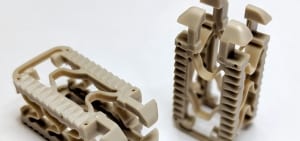
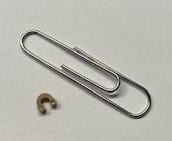
With the ability to injection mold shot sizes as small as .015 grams with a wall thicknesses as thin as .008 of inch, Performance Plastics is anything but typical. We are one of the leaders in tight tolerance, highly detailed medical parts.
For more information on how Performance Plastics can solve your tight tolerance molding challenges, please contact Rich Reed, VP Sales & Marketing at 513.321.8404 or [email protected].
Plastic injection molding and 3D printing are both viable technologies. 3D printing has given engineers the power to create designs and bring them to life in a matter of hours. Injection molding, on the other hand, is the proven technology for complexity, quality, and value. It is used to produce high-volume runs of complex plastic designs quickly and reliably. They are complimentary processes.
The use of 3D printing in innovative and experimental scenarios is a viable technology for its ability to create custom plastic part designs quickly. The medical industry has embraced the use of the quick-turn technology to create custom items such as prosthetics, dental products, orthopedics, implants and more. 3D printing is the optimal choice during the design process, when low volume and design changes are necessary in refining the design process. However, the 3D process limits your material choices, as all materials are not a fit or even available in a form suitable for 3D printing.
3D printing is best used for:
Quick turnaround times
Low volume, slower production speeds
Parts in the design phase with frequent changes – prototyping, lower product quality
Smaller part sizes
Once a design has been finalized, plastic injection molding becomes the optimal process. Most of today’s plastic parts are manufactured using plastic injection molding – it’s best for producing large quantities quickly and reliably in high volume runs. You have greater material options with plastic injection molding, and you can control material weight, cost, flexibility with endless combinations of materials. It helps organizations control the cost and integrity of designs with complexities and tight tolerances.
Plastic Injection molding is best used for:
High volume
Finalized part design
Enhanced strength and durability
Complex, precision, detailed parts
At Performance Plastics we have been presented with many opportunities that were previously manufactured using 3D printing, only to discover that injection molding was the more appropriate technology. As experts in FEP, PFA, PAI (Torlon), Ryton PPS, PEEK and Ultem resins we frequently work with mission-critical applications. We understand that 3D printing can be an essential component of the design process. If you have a project that requires high volume (5,000+ parts per year), has high-temperature resin requirements, tight tolerance with complex geometries, plastic injection molding is your solution.
If you don’t have a lot of time, need a lot of flexibility, and need a few parts right now, 3D printing may be your choice. But, if you need to do large, repetitive product runs with complex geometries, tight tolerances, with high quality, consider plastic injection molding.
https://performanceplastics.com/wp-content/uploads/precision_injection_molding.png395571Aileen Crasshttps://performanceplastics.com/wp-content/uploads/Performance-Plastics-logo-PNG-150.pngAileen Crass2021-06-03 13:41:122025-04-23 11:19:25Plastic Injection Molding vs 3D Printing
Performance Plastics specializes in precision injection molding of high-performance plastics. Our precise production process gives us the ability to injection mold difficult polymers, producing high quality thermoplastic products.
High performance plastic materials, such as PAI (Polyamidimide) Torlon®, possess ideal properties when it comes to molding for strength and durability. Recognized as one of the highest performing thermoplastic materials, Torlon® exhibits greater compressive strength and impact resistance than other high-performance plastics. Torlon’s high creep resistance and extremely low coefficient of linear thermal expansion (CLTE) provides excellent thermal stability. This provides for creating manufactured parts that exhibit high levels of tensile strength, friction wear, compression strength, and rigidity, ensuring exceptional mechanical loading capabilities up to 525°F (275°C).
At Performance Plastics, we are experts in injection molding, specializing in high performance plastics. High performance plastics, such as Torlon®, can be extremely difficult to injection mold due to the polymers unique structure. Torlon® is a reactive polymer, which can cause complications during the injection molding process. A specific set of conditions, equipment, and processing procedures must be followed to effectively injection mold Torlon®. Our proprietary tool design software, processes and equipment enables us to injection mold components having complex geometries made from challenging ultra, high-performance thermoplastic materials and reinforced compounds.
We utilize a unique combination of extensive material knowledge, mold flow analysis, a design system and process expertise to eliminate or minimize the need for secondary operations. Our expertise in process control allows us to effectively injection mold Torlon® in parts with extremely tight tolerances. This gives us the ability to provide you with an injection molded part made from the highest strength and stiffness of any commercial thermoplastic.
Torlon® is one of the many high performance polymers Performance Plastics offers. For more information on Performance Plastic’s capabilities, please contact Rich Reed, our Vice President of Sales and Marketing at 513.321.8404 or email at [email protected].
EnduroSharp® has changed the way aerospace maintenance professionals remove sealants and adhesives from substrates and fasteners. EnduroSharp® tools are made from Torlon®, a high strength polymer, creating a non-metallic gap blade tool that will not damage composite structures during use. The EnduroSharp® lineup consists of a variety of scraper blades, gap blades, reamers, cutters, bits, and discs for removal of adhesives on aircrafts. The product line includes a variety of kits containing all the parts and sizes.
Gap blades are designed for use in smaller spaces where scraper blades are too large. With a multi head edge, they are a quick, safe and effective method of removing gap materials, sealants and adhesives from composite structures.
The EnduroSharp® Gap Blade & Holder Kit is one of the most popular kits offered.
This Kit contains:
15 EnduroSharp® Torlon® Gap Blades – 1 each of EnduroSharp® part numbers:
TGB-75-75, TGB-75-16, TGB-75-25, TGB-10-75, TGB-10-16, TGB-10-25, TGB-12-75, TGB-12-16, TGB-12-25, TGB-17-75, TGB-17-16, TGB-17-25, TGB-23-75, TGB-23-16, and TGB-23-25), 1 each, “Pocket” Scraper Blade Holder (Part Number: ESSBH002), and 1 each, Standard Scraper Blade Holder (Part Number: ESHH003). The blades slide and lock into the detent pin of the standard gap holder handle, to easily alternate between the sizes as needed.
The EnduroSharp® Gap & Holder kit is just one of the many kits offered in the EnduroSharp® Product line. Contact Rich Reed for our Vice President of Sales and Marketing, at (513) 321-8404 or [email protected], more information on our EnduroSharp® kits and products
Under contract with the Air Force Research Laboratory’s Materials
Integrity Branch (AFRL/RXSA), the University of Dayton Research
Institute (UDRI) developed improved material removal tools & accessories
Transitioning developed tools to multiple weapons systems for material
removal applications on composite components
The lack of reliable and effective nonmetallic material removal tools available to maintainers
drives the continued use of unapproved tools and/or methods when removing materials from
aerospace vehicles. The use of metallic tools has resulted in damage to vehicles, both short term
and long term, causing the need for expensive repairs and reduction in vehicle availability.
The University of Dayton Research Institute under contract to the Air Force Research Laboratory
has developed and commercialized a series of nonmetallic material removal tools under the
“EnduroSharp” trademark manufactured from glass-filled Torlon thermoplastic produced by
Solvay Engineered Plastics. The use of this material coupled with the tools’ designs is
responsible for their superior stiffness and durability (resistance to chemicals and heat) and
enhance the tools’ ability to maintain sharp cutting edges, allowing efficient removal of coatings,
boots, tapes, sealants, gap fillers and caulking materials, pressure , sensitive adhesive (PSA), and
tape residue without damaging underlying composite surfaces.
The lack of reliable and effective nonmetallic material removal tools available to maintainers
drives the continued use of unapproved tools and/or methods when removing materials from
aerospace vehicles. The use of metallic tools has resulted in damage to vehicles, both short term
and long term, causing the need for expensive repairs and reduction in vehicle availability.
The University of Dayton Research Institute under contract to the Air Force Research Laboratory
has developed and commercialized a series of nonmetallic material removal tools under the
“EnduroSharp” trademark manufactured from glass-filled Torlon thermoplastic produced by
Solvay Engineered Plastics. The use of this material coupled with the tools’ designs is
responsible for their superior stiffness and durability (resistance to chemicals and heat) and
enhance the tools’ ability to maintain sharp cutting edges, allowing efficient removal of coatings,
boots, tapes, sealants, gap fillers and caulking materials, pressure sensitive adhesive (PSA), and
tape residue without damaging underlying composite surfaces.
Plastic injection molding continues to become more and more sophisticated with part tolerances becoming tighter and tighter. Initially, tight tolerance was defined as +/-.002 inches and a very tight tolerance is +/-.001 inches. But today there are many factors that impact tight tolerance including part complexity and size, resin selection, tooling, and process conditions. So, getting the mold, part design, material selection and process correct is crucial when working with a product that requires tight tolerances.
Tight tolerances are essential when manufacturing complex parts, especially in the aerospace & defense, medical & life sciences, and diversified industrial sectors. A few thousandths of an inch can be the difference between a component that fits and one that does not – if tight tolerances are not achieved properly the resulting products may underperform. So, it is critical that clients understand tight tolerances and their underlying objectives. Performance Plastics has parts in production that are +/-.0004 inches. Parts are measured in their Metrology lab with a CT Scanner.
Benefits of Tight Tolerances
There are many benefits to manufacturing parts with tight tolerances. It ensures that parts work together smoothly and fit as intended in their final form; parts mesh well and deliver enhanced functionality. They produce lower failure rates and result in higher client satisfaction. Tight tolerances can also result in fewer post-molding processing requirements. Additionally, tight tolerances allow for parts to be transitioned from metal to plastic, reducing overall weight and cost of the final product. This can be very advantageous in some industries, such as aerospace and defense.
Design for Tight Tolerances
Not every plastic injection molding project requires tight tolerances, and some organizations insist on tight tolerances for non-critical features. Tight tolerance should only be required in instances where they are critical. Many products require standard tolerancing because the consequences of failure are low. As a general rule, designers should keep tolerances as large as possible while maintaining the desired functionality of the part.
Materials for Tight Tolerances
Additionally, material selection is a critical element in achieving tight tolerances. Certain resins perform better under certain circumstances. An experienced design engineer can guide a client in choosing the most affordable material that will deliver the best result. So, it’s critical to bring in an experienced team early in the design process.
By engaging a production team during the design phase, part functionality, material selection and design can be discussed upfront, and the team can jointly develop a manufacturing process and correct materials that will produce high-precision components. It is crucial for organizations to partner with an experienced injection molder, who has expertise; the design and manufacturing teams should be integrated to allow manufacturability issues to be identified and addressed during the design process – thus saving significant time and unnecessary cost.
Establishing the right process and correct materials for each product and developing repeatability are key to manufacturing tight tolerance parts. While every application is different, there are some process and material conditions that impact tolerances. For example, quick cavity filling and uniform cooling at the desired temperature are conditions that are crucial to achieving repeatability, and thus, parts with tight tolerances.
Performance Plastics is highly skilled at designing and molding using high performance materials such as PEI-Ultem®, PAI-Torlon®, Ryton® PPS Plastic, PEEK, and Fluoropolymers such as FEP, PFA, and PVDF. We work with our customers to solve technically challenging problems. We can propose materials to implement part functionality in the design stage of development. We offer manufacturing solutions such as a clean room, the ability to offer direct gating of fluoropolymers, high volume production, visual inspection, and automated facilities.
For more information and solutions, please contact Rich Reed, Vice President of Sales & Marketing at 513-321-8404 or email [email protected]
For decades, maintenance personnel have searched for a non-metallic scraper tools or sealant remover tools that could hold an effective edge, but not damage aircraft structures, like composite and aluminum.
That’s why Performance Plastics created the patented EnduroSharp® line of Torlon® Maintenance Tools. Suitable for aircraft, automotive, marine and windmill structures, these nonmetallic scraper tools hold a superior edge and are extremely durable for removing sealants, adhesives, and coatings. What’s more, maintenance personnel no longer have to resort to sharpened putty knives, scribes, and utility blades.
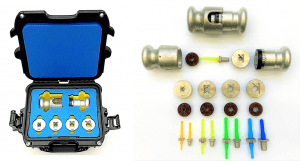
EnduroSharp® is pleased to announce our new and improved Nutplate Abrasion Tool (NAT). An alternative to traditional abrasion methods, this tool was specifically designed to allow maintainers to quickly abrade the bond surface of CR series nutplates. The tools radially abrade the bond surface of the nutplate, ensuring that 100% of the bond surface is abraded uniformly in a manner of minutes.
The NAT kit consists of six components:
One each upper handle (top)
One each lower handle (base)
Four each nutplate base inserts
The NAT kit is available with a convenient carrying case. The rugged case comes with a high-density custom foam insert for easy inventory and protection.
For more information and solutions, please contact Rich Reed, Vice President of Sales & Marketing at 513-321-8404 or email [email protected]
 For four decades, Performance Plastics has been delivering the highest quality custom plastic injection molding solutions in the industry for our customers. We take a highly specialized and consultative approach, working closely with our customers to develop the solutions needed to solve the most complicated issues.